
The Ultimate Guide to Growth Hacking for Exponential Success in 2026
Last updated on
by

Are you getting steady traffic to your website but still waiting for growth to show up? Maybe you have a product that people like, but no marketing team and no budget to hire one.
Growth hacking closes that gap, and it’s what people mean when they point to the early days of Groupon, Airbnb or Dropbox. And it’s not just for startups. Any business can use growth hacking techniques to accelerate your success without breaking the budget.
So I’ll show you what growth hacking is, how to measure it, the strategies we and our customers run, plus two more methods worth borrowing.
What Is Growth Hacking?
Growth hacking is fast, low-cost experimentation to find out what actually grows a business. You run a lot of small marketing tests, keep the few that bring in users or sales, and drop the rest.
Marketer Sean Ellis coined the term in 2010. The “hacking” part has nothing to do with code, and it means the clever shortcuts that bring big results on a small budget.
Fast-growing companies like Groupon gained millions in their first few years using growth hacking strategies.
So is growth hacking still a thing in 2026? The term has aged, but the techniques I’ll show you below still bring in users and sales.
What Is a Growth Hacker?
Anyone who runs a growth hacking strategy is a growth hacker. Sean Ellis described a growth hacker as “a person whose true north is growth.”
He wrote that in Find a Growth Hacker for Your Startup back in July 2010, and I still think it’s the cleanest description I’ve seen.
Traditional marketers usually care about brand recognition and public relations too. A growth hacker doesn’t, and they don’t use any tactic that they can’t tie to more users or revenue.
And yes, growth hacker is a real job, although companies often advertise it as growth marketer or growth lead these days. Plenty of teams also split the work across growth marketers, growth engineers and product managers.
The Growth Hacking Funnel: Key Metrics to Measure
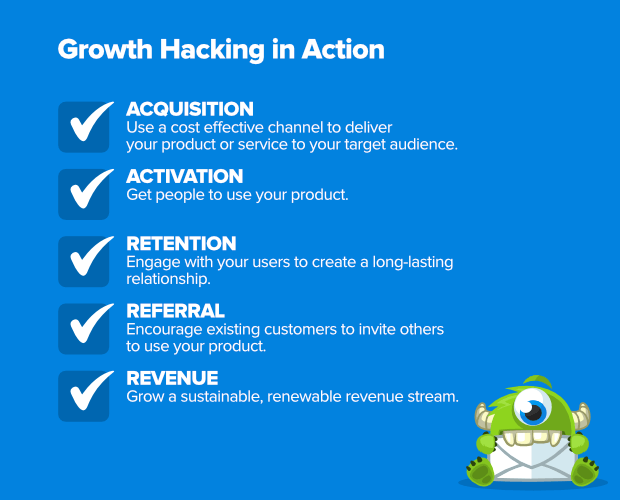
Acquisition, activation, retention, revenue and referral are the five stages of the growth hacking funnel.
Many growth hackers focus on “pirate metrics,” which are called this way because of their initials: AARRR.
Fun, right? Effective, too.
- Acquisition: getting new customers. Track new visitors and the channel each one came from.
- Activation: convincing customers to use the product. Measure how many signups actually finish setup.
- Retention: keeping customers and reducing churn. Watch repeat visits and your monthly churn rate.
- Revenue: making money. Compare revenue per customer with what it costs you to get one.
- Referral: getting other people to refer new customers. Count how many customers send you someone new.
If you’re not sure which stage to work on, I suggest starting with the one where your own numbers look worst.
Your own website is worth the same check before you send more traffic to it. Walk it the way a first-time visitor does, and make sure they can find the next step and reach you with a question.
They should also see the social proof that backs up your expertise. Anywhere a visitor can’t easily convert, you have a bottleneck to fix.
That might be a slow page, or a form asking for more information than the offer is worth. For the full process, see our guide to conversion rate optimization.
Most of the strategies I will cover below focus on acquisition and referral, so make sure you know which stage you want to focus on first before you pick one.
Before You Begin: Foundations for Success
Before you try any of the techniques I’ll cover below, there are two foundations I recommend putting in place. Without them, a growth hacking technique can bring you a spike in traffic that doesn’t lead to any signups.
The first is product-market fit. That means your product solves a problem that people already have, and solves it well enough that they’ll pay you for it.
If you’re still testing that, our product launch checklist covers how to validate it with real buyers.
The second is knowing who actually buys from you, which means their demographics, their goals, and the pain points your product solves. It also helps to know where they go for information besides your website.
With that, you can match each technique to a specific buyer persona instead of writing for everybody at once.
7 Growth Hacking Techniques That Still Work in 2026
Five of the seven techniques below are ones we run at OptinMonster or our customers run, and two are worth borrowing from companies that did them well.
On the one hand, strategies are long-term and rarely change. A technique is the shorter-term version that you set up on your own website. However, you will often see the terms used interchangeably.
1. Use Exit-Intent® to Grow Your Email List
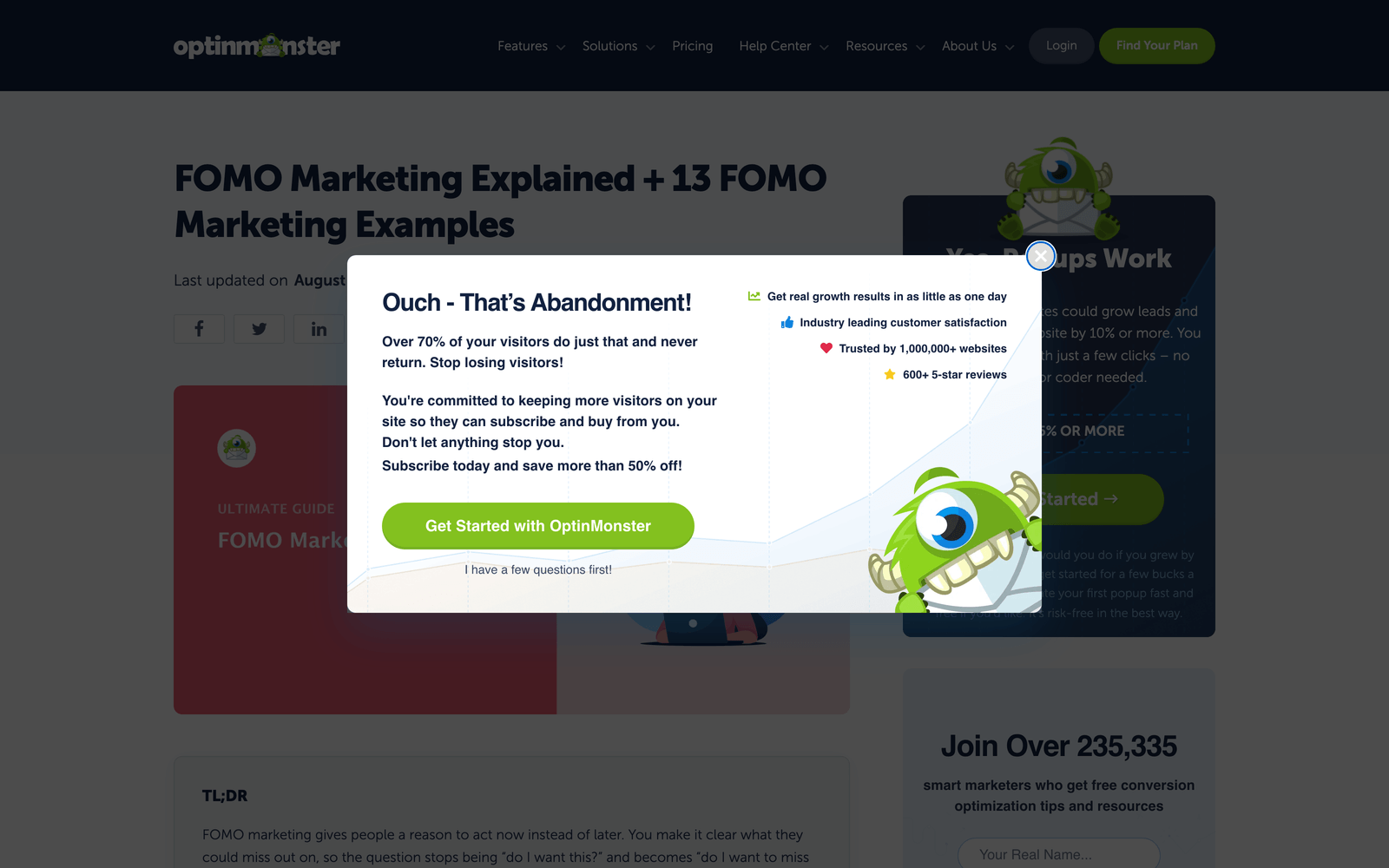
Most visitors who leave your website never come back. So, the seconds before they go are your last chance to ask for an email address. An exit-intent popup spots the signal that someone is leaving and shows your lead magnet before they go.
Exit-Intent® is our own feature, and it’s the campaign type we run most on optinmonster.com. It has worked well for our own list growth, and I think the timing is why.
Every other campaign type interrupts a visitor who is still reading, but this one waits until they’ve decided to leave, so it costs them nothing.
Here’s an example, and there are more in our roundup of exit popup hacks:
On the other hand, a lead magnet is an incentive that you’ll offer your visitors in exchange for sharing their contact information with you. Our list of lead magnet ideas is a good place to start.
In our case study with FitSmallBusiness, they matched each offer to its article, and one optin on their Google Advertising articles converted at 40.38%. And in our case study with Adam Enfroy, the offer behind the exit-intent campaign was a 15-page checklist on launching a WordPress website.
To set up Exit-Intent® on your own website, you’ll need a Pro or Growth plan.
Then:
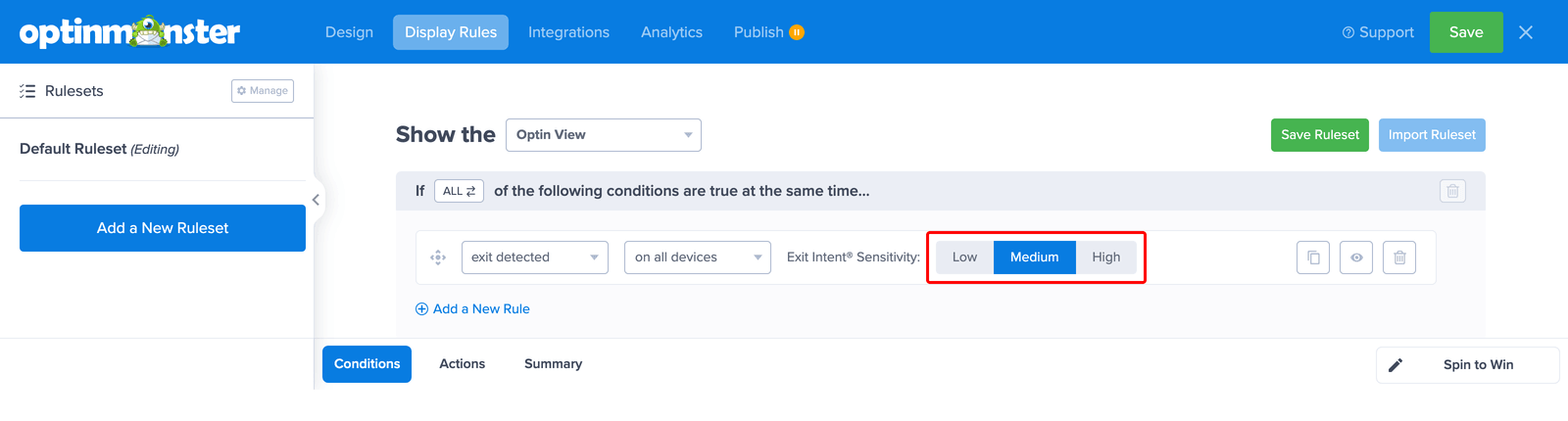
- Open the Display Rules view in the OptinMonster campaign builder.
- Add or edit a rule, select When (Triggers), then choose Exit-Intent®.
- Choose the devices you want it to run on, then set the Sensitivity.
- Save the campaign.
Sensitivity decides how early your campaign will fire, and on desktop, Low, Medium and High trigger at 1, 50 and 150 pixels from the browser edge. On mobile, they fire when a visitor scrolls back up 50%, 30% or 10% of the device height.
Keep in mind that Exit-Intent® isn’t available on Inline campaigns, because those display inside your page content rather than over it. On mobile it triggers on a quick scroll back up, so it doesn’t hijack the back button, which is the practice Google’s 2026 spam policy targets.
For more details, see our guide on how to create a Exit-Intent® popup for mobile.
2. Offer Discounts for Social Shares
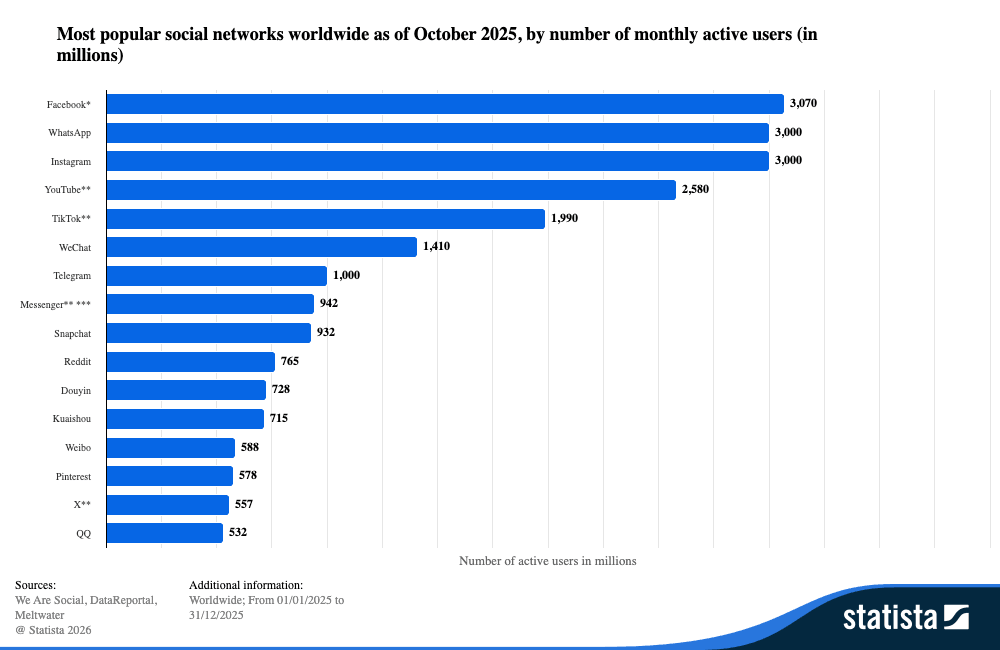
Your customers are already on the biggest social networks in the world, sitting next to friends who look a lot like them. A share puts your offer in front of those friends without you paying for the reach.
Why it works: a recommendation from a friend arrives with trust that an ad has to earn from scratch. And the discount gives the customer something back for a post they would otherwise make for nothing.
Groupon did this for their own brand using a “carrot and a stick” strategy.
The carrot is a good deal and the stick means that those who don’t share may miss out on the deal.

If you sell on Shopify, then I recommend AAA Social Share Marketing or a similar app. It asks for the share when a customer adds a product to the cart, then applies the discount straight away.
On your own website, you can run this offer as a popup that asks for the share, then shows the code once they post it. I suggest settling the reward first, either a percentage off or free shipping, and only asking once the visitor has something in the cart.
See our guides to generating leads on X (formerly Twitter) and increasing traffic from Facebook for more social media growth hacking techniques.
3. Make Onboarding a Game
A new user who never finishes setting up your product never gets to the part that would have kept them. Gamified onboarding fixes that drop-off with a short list of steps that earn extra credits, a higher usage limit, or a new feature.
Why it works: people don’t like leaving a list half done. When two steps are left and each one takes a click, then finishing is the easy option. The prize doesn’t have to be big, either. A small upgrade is usually enough to get somebody to finish the setup steps.
And when the reward is for inviting somebody else, then your existing users become the channel that brings you new ones.
That’s the strategy Dropbox used by letting users unlock additional storage after completing certain milestones, such as uploading content and sharing on social media to attract new users.
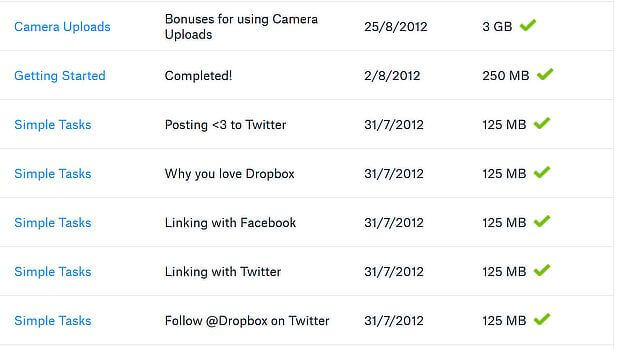
For your own product, I recommend writing down the three actions a new user has to take before they get any value from it. Then, you can attach a reward to the last one, and I suggest making an invite step one of them.
4. Build an Insanely Useful Free Tool
One of the most reliable growth hacking techniques is to build a tool that your audience genuinely needs and let them use it for free.
It brings people to your website who would never click on a blog post, and it keeps working long after you launch it.
We built our own free Headline Analyzer for that reason. You paste a headline and it scores it out of 100, and the full report is yours once you enter your name and email address.
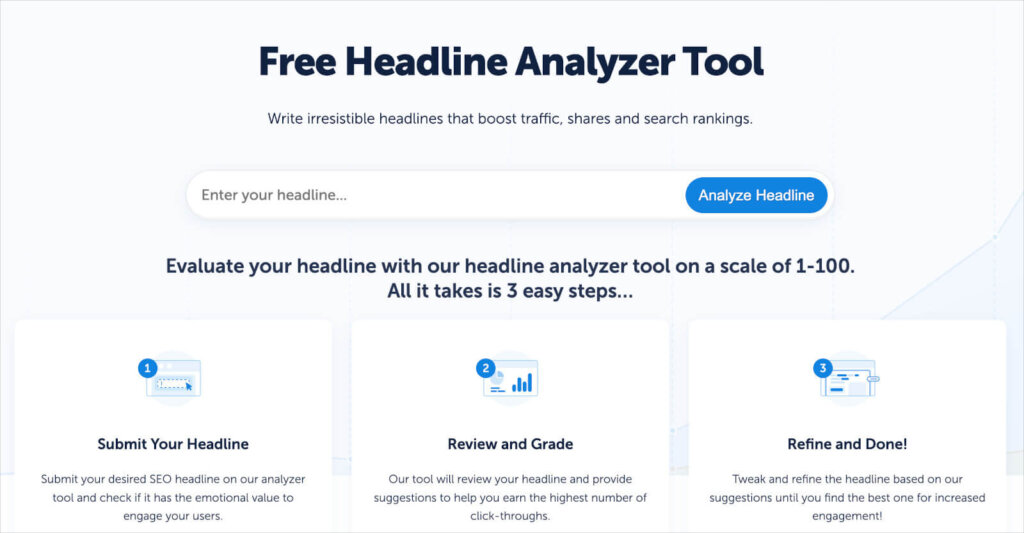
Why it works: if you write headlines, you want to know whether yours is any good, so the tool answers a question our audience has. It’s worked well for us, because the people who test a headline care about conversions, and they are who we want on our email list.
Not sure what to build? I recommend asking your customers for feedback first, because they will tell you which tools they would use, and that’s a better starting point than guessing.
5. Run a Giveaway
A giveaway gives people who have never heard of you a reason to hand over their email address.
Why it works: anyone who enters has told you they want what you sell, so you get a list of people who might buy.
We ran one for our 10th birthday using RafflePress, a WordPress giveaway plugin. It had three prize tiers, and entering took only a few clicks.
The entry that counted for the most entries was a newsletter signup, so it built our email list rather than our follower count. We also included follow and social share actions as bonus entries, so our existing audience helped increase reach for us.
We also ran a giveaway for Black Friday and gained more than 20,000 entries, 3500 new users, and a 3x increase in email list growth.
Here are some examples of how to run a social media giveaway effectively:
- On X (formerly Twitter), ask entrants to mention your account so that every entry lands in your notifications. X’s promotion guidelines also recommend capping entries at one per day.
- On Facebook, run the giveaway as an image post with a comment as the entry. Meta’s policy for Pages, groups and Events rules out asking entrants to share the post or tag their friends.
- On Instagram, a themed photo contest tied to one hashtag keeps every entry in one place. Keep in mind that Instagram’s promotion guidelines want your rules to say Instagram isn’t running it.
On your own website, I recommend making the newsletter signup the entry that count for the most and leaving the bonus actions optional. Make sure the prize is something only your own buyers would want, or you might collect prize hunters instead of leads.
There are more tactics like this one in our growth hacking strategies guide.
6. Let Your Product Advertise Itself With a Badge
A small “powered by” badge on your product turns everything your customers publish into an ad for the tool behind it.
That has been a successful growth channel for us. Our badge is included on many of the campaigns that our customers run, so it turns up on a popup a marketer is already watching convert.
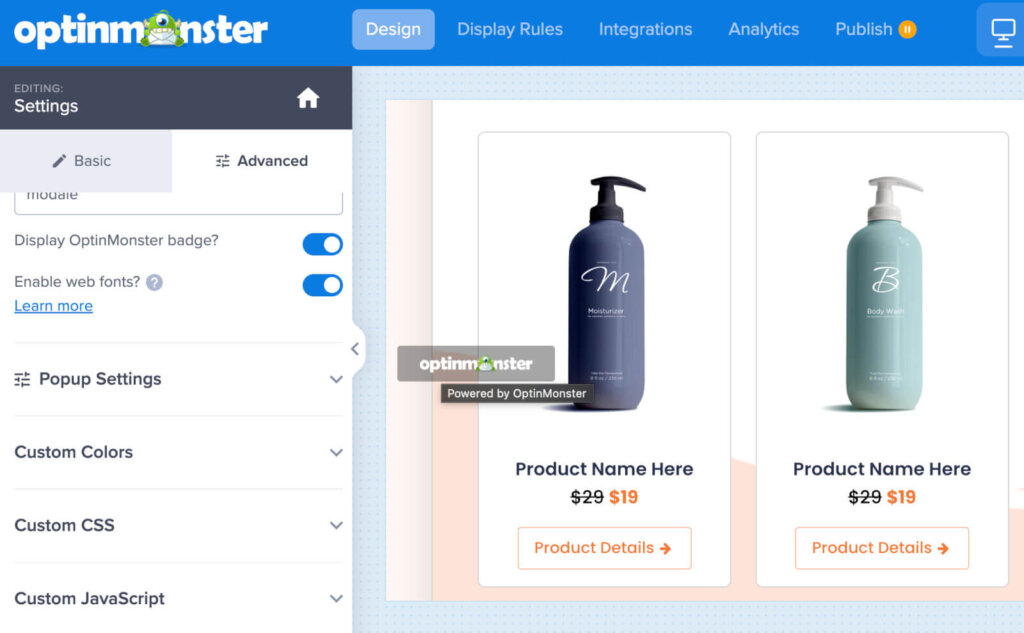
Why it works: This growth hacking technique is a channel that keeps working after you set it up once, so it’s low effort. And when the badge sits on what your product makes, like a booking page or a popup, it does the demo as well.
Plenty of companies grow this way, and all of them charge to take the badge off:
- Mailchimp signs off every email a free sender ships, and removing that branding is something you need to pay for.
- Calendly brands every booking page, so each meeting someone books doubles as an ad to the person booking it.
- Loom stamps the video pages you send out, which puts it in front of the team members you are already sharing with.
- Linktree includes their branding on every free profile,.
You don’t need a software product to copy this, and a booking widget, a client dashboard, a template, a calculator or a monthly report your customers pass around can all carry a “built with” link. I recommend making it easy to turn off, because a badge that annoys your customer is one they will remove anyway.
Read next: our exit intent popup examples.
7. A/B Test Every Campaign
Every technique in this list starts as a guess, and the headline, the offer or the timing is doing most of the work. And you can’t tell which one is having the biggest impact without running a test.
Why it works: a split test replaces your opinion with what your own visitors actually do. The winner then runs on all of your traffic, so finding the best-performing option can increase your conversions.
I suggest putting two genuinely different offers against each other, because a small change like color change rarely teaches you anything.
In our case study with Storyly, two versions of the same Exit-Intent® campaign ran on their Contact Sales page. The version whose button sent visitors to a gated demo video converted at 6.14%, and the one pointing at their G2 awards converted at 2.4%.
You’ll need OptinMonster Plus or higher to run a split test for your popups. From the Campaigns screen, find the campaign you want to test and select the Create Split Test icon above the campaign preview pane.
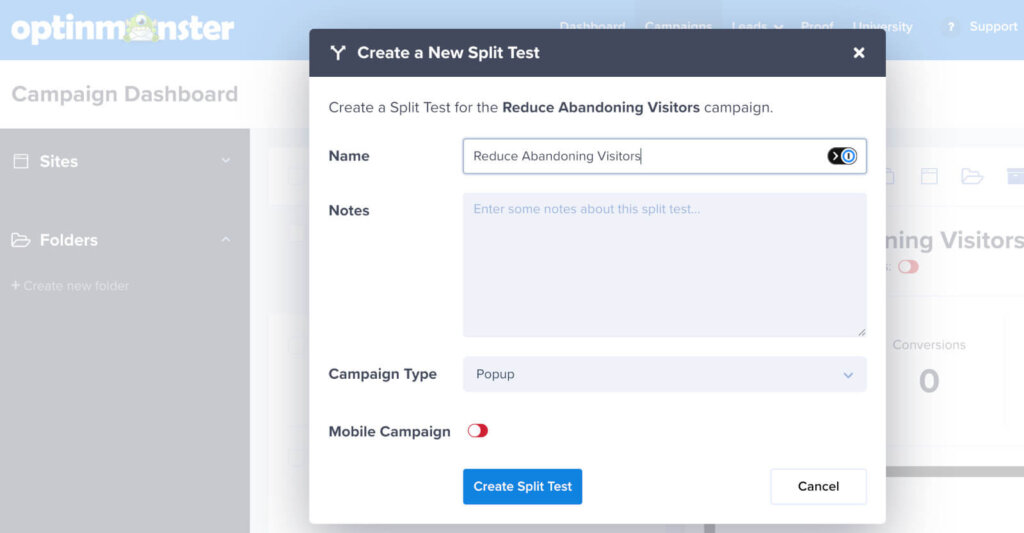
Then give the test a Title, and some Notes if you want a record of what you changed. The Duplicate icon instead copies a child campaign inside the test group.
I recommend testing one element at a time, starting with the offer, because a test with two changes can’t tell you which moved the number.
For full details, see our guide to A/B testing best practices, and the split-test documentation walks through the setup, screen by screen.
Growth Hacking Tools We Recommend
You can run every technique in this guide with a small stack, and these six tools are the ones I recommend setting up first:
- OptinMonster – turns the traffic you already have into subscribers and sales.
- Constant Contact – sends email to the list you build, and it’s beginner-friendly to set up.
- MonsterInsights – shows which pages and campaigns actually convert, inside WordPress, so you don’t have to dig through GA4 reports.
- Semrush – finds the keywords and competitor gaps worth chasing.
- RafflePress – runs the giveaway from your WordPress website.
- Buzzsumo – shows which content in your topic is getting shared, and who is sharing it.
For the full list, with where each one fits in the funnel, see our guide to the best growth hacking tools.
Growth Hacking FAQs
What is growth hacking in simple terms?
Growth hacking is running small, cheap marketing experiments to find the few that grow a business, then putting your budget behind those. It uses the traffic and email list you already have instead of an ad spend, and our growth hacking glossary entry has the longer definition.
Is growth hacking still a thing?
Yes. The tactics change but the method doesn’t. So, you test something small, measure the funnel stage it was meant to move, and keep what works.
Is growth hacker a real job?
Yes, though the title varies by company, and it’s a marketing job that owns a growth number like signups, rather than one channel. You don’t need the title to run most of the techniques in this guide.
What are the best growth hacking techniques?
The best technique fits the funnel stage you want to improve. So, if visitors leave without subscribing, try an exit-intent campaign or a free tool. If you have subscribers but no referrals, a giveaway or a Powered by badge on your own product reaches further.
Get Started With Growth Hacking
I recommend picking one technique from this guide, running it for 30 days, and measuring the funnel stage it was meant to move.
When you’re ready to build the campaign, compare our OptinMonster plans and pick the one that covers the technique you chose.
Disclosure: Our content is reader-supported. This means if you click on some of our links, then we may earn a commission. We only recommend products that we believe will add value to our readers.
2 responses to “The Ultimate Guide to Growth Hacking for Exponential Success in 2026”
-

This guide is for the marketers who want to Break Through that wall. Thanks for sharing!
-
Great blog post! I found the insights on growth hacking really valuable and practical. The examples provided were helpful in understanding how growth hacking can be implemented in real-life scenarios. Looking forward to more content like this in the future. Keep up the good work!


Add a Comment