
FOMO Marketing Explained + 13 FOMO Marketing Examples
Last updated on
by
TL;DR
FOMO marketing gives people a reason to act now instead of later. You make it clear what they could miss out on, so the question stops being “do I want this?” and becomes “do I want to miss it?”.
The FOMO marketing examples that still convert in 2026 are the ones tied to something real. These include live purchase activity, honest stock counts, deadlines that genuinely expire, waitlists, and limited drops.
You’ve probably already seen FOMO in action, even if nobody called it that. The “only 2 left” note on a product page or the countdown on a checkout are designed to act on your fear of missing out.
And if you’re honest, this strategy has probably worked on you at least once.
The useful question in 2026 is which FOMO marketing strategies are still effective for marketers and business owners, and how to set them up so that they help people decide instead of annoying them.
That’s what this guide is for. I’ll show you 13 examples worth copying, what makes each one work, and how to build it, including a few from campaigns we run on our own website.
- What FOMO Marketing Is and Why It Works
- FOMO Marketing Examples You Can Copy
- Make Your Last Offer a One-Shot Deal
- Show Shoppers That Other People Are Buying
- Put Your Best Sellers Front and Center
- Let Shoppers See What They Just Missed
- Show How Few You Have Left
- Give Your Offer a Real Deadline
- Make Your Offer Feel Genuinely Exclusive
- Show Your Review Count, Not Just Your Rating
- Show Real Customers Using Your Product to Promote Experiences
- Reward the First People to Buy
- Bring FOMO Into Your Emails
- Turn Out of Stock Into a Waitlist
- Run a Limited Drop Instead of a Sale
- Where FOMO Marketing Doesn't Work
- FOMO Marketing FAQs
- Get Started With FOMO Marketing
What FOMO Marketing Is and Why It Works
FOMO marketing means showing people what they could lose out on if they wait, rather than only telling them why your product is good. So you could say that you have three rooms left, or the sale ends Friday, or forty-seven people bought this today.
The offer is the same either way, but it suddenly feels a lot less comfortable to leave the decision until tomorrow.
What FOMO Actually Means
There’s a proper academic definition, and it explains why everything below works. Writing in Computers in Human Behavior in 2013, Przybylski, Murayama, DeHaan and Gladwell defined it as “a pervasive apprehension that others might be having rewarding experiences from which one is absent.”
Notice that the definition never mentions a product. It’s about other people, which is what most FOMO copy misses because it leads on the discount instead of considering the customer.
Why FOMO Gets People to Act
Two things make FOMO marketing more effective than five years ago, and the first is just how much of other people’s lives we all see now.
DataReportal’s Digital 2026 report found there are 5.66 billion social media “identities”, or 68.7% of the world’s population. Those are identities rather than people, since one person can hold several. But either way, most of your customers spend their day watching other people get things they might also want.
The second factor is that FOMO works when you attach it to a real trigger, but not when you try to add urgency to everything. For example, in our case study with Fastrack, a travel marketing agency, an exit-intent popup offering a limited-time discount got 53% of abandoning visitors to click through and claim it.
That’s our own reported figure for one customer campaign and not an independent audit. So, treat it as a worked example and not a number you should expect to hit with your own campaigns.
13 FOMO Marketing Examples You Can Copy
These run roughly in order of how much you get back for the effort involved. The first one is ours, and it’s the one I would build first on any website.
1. Make Your Last Offer a One-Shot Deal
Probably the strongest FOMO offer you can make is one that disappears when the visitor does. So, somebody trying to leave your website gets one final deal, and if they close the tab, then they lose it.
Yes, the tool for this one is ours, but we’ve seen it work really well across our own websites. OptinMonster’s Exit-Intent Technology® watches how the cursor moves and triggers a popup right as somebody’s about to leave your website.
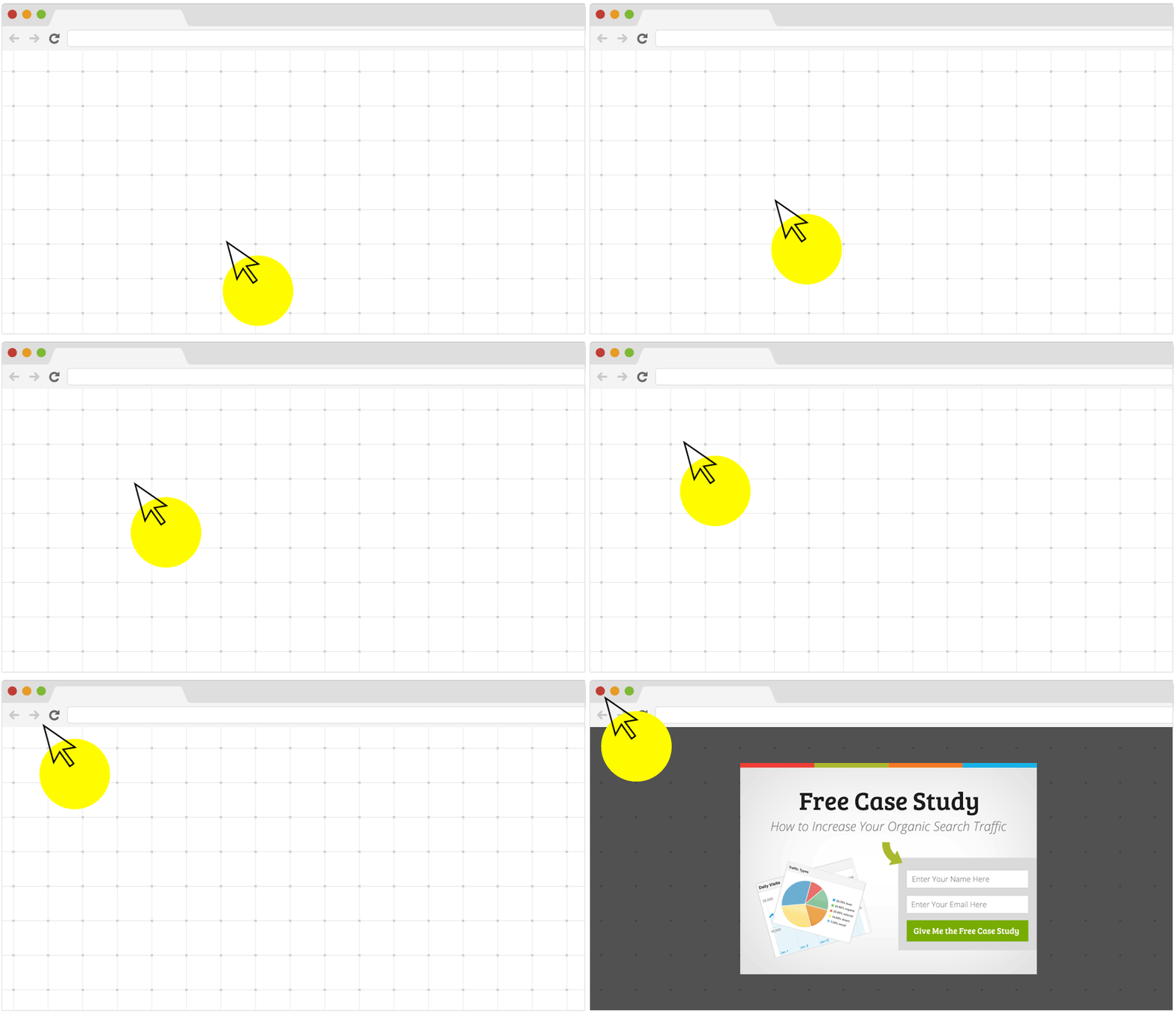
Why it works: this is the only moment in the whole list where the thing your user could miss out on is the offer itself. If they close that tab, then it’s gone. It’s also the politest form of FOMO, because every other method interrupts somebody who’s still making up their mind. This one waits until they’ve already decided to leave, so there’s no browsing experience left to ruin.
In our case study with Rich Page, Exit-Intent® increased conversions by 316%, while our case study with Ryan Robinson saw subscribers rise 500%.
You can easily switch it on from the display rules section of the OptinMonster campaign builder:
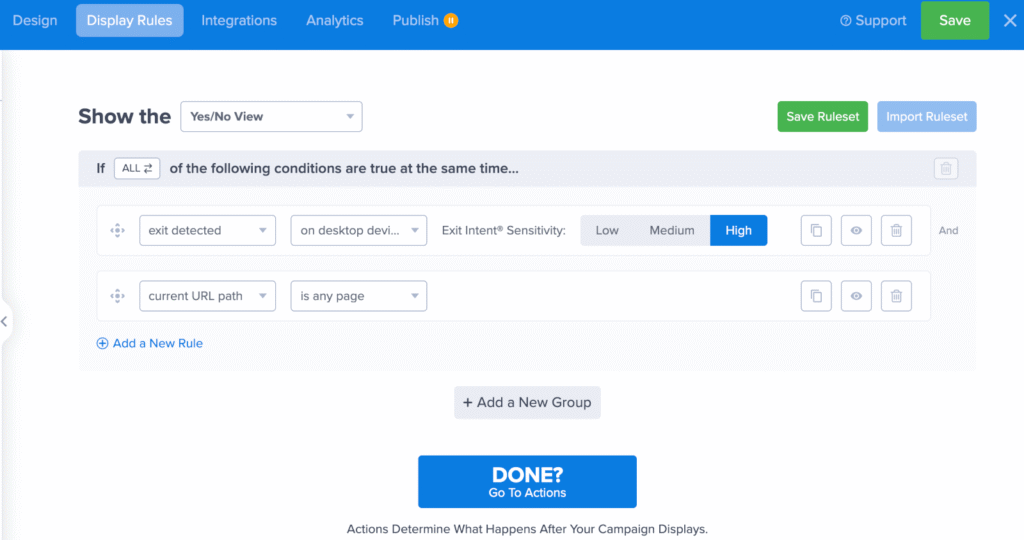
You could also add a second rule so it only fires where you want using page-level targeting. For example, you may want to display it on specific blog posts, your sales page, or a landing page.
For full details on how to create this on your own website, see our exit-intent popup examples and how to set them up.
Want this built for you?
Our conversion experts will design 1 free campaign for you, exit-intent rules and all, so you can try it out on your own traffic before you commit to building the rest.
2. Show Shoppers That Other People Are Buying
A small notification in the corner of the screen showing a real purchase, with a real first name and a real location can be a big motivator and a source of social proof.
Why it works: offering a discount asks the visitor to trust you. On the other hand, showing a stranger’s name and real location asks them to trust somebody like themselves, and that’s a much easier ask.
It also answers what a first-time visitor is really wondering, which isn’t “is this a good deal?” so much as “does anybody else buy from these people?”. Booking.com does the same job when it tells you how many others are looking at the room you’re considering booking.
And that’s where the FOMO really comes from. We don’t just dislike missing out, we especially hate the idea that somebody else might get something good before we do.
Here’s an example of how this looks in action on a real website:
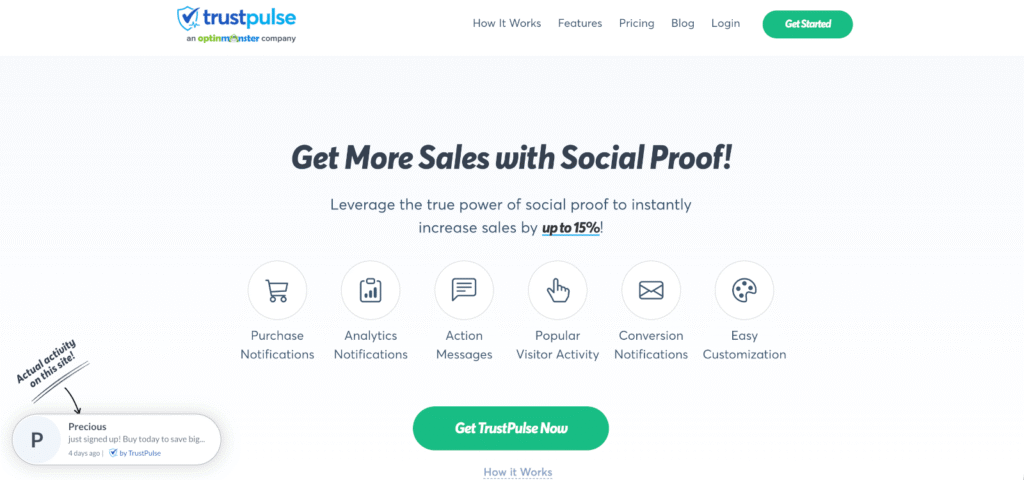
We set up these notifications on our own site using TrustPulse. This powerful social proof software is built by the team behind OptinMonster.
Make sure to control the frequency of the live activity notifications, because a notification every four seconds can read as fake. And if your last sale was three weeks ago, then showing it does more harm than showing nothing. If your order volume is low, then widening the time window is better than faking the count.
To learn how to set it up, see our guide on how to use a recent sales popup to boost your revenue.
3. Put Your Best Sellers Front and Center
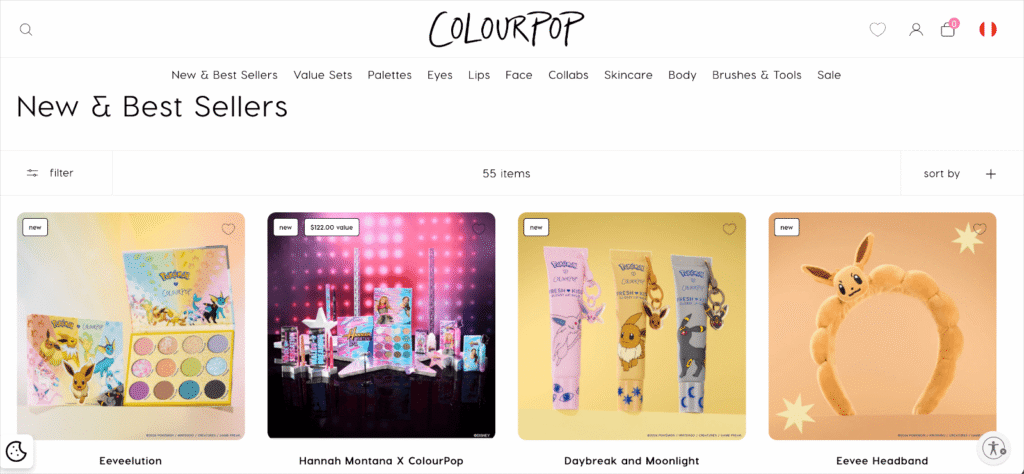
A best-sellers row tells a visitor which of your many products other people actually chose, which is the question they were going to have to answer anyway.
Why it works: choice paralysis costs more sales than price does, so ranking your own catalog saves the visitor from comparing everything themselves. But the FOMO comes from what that ranking implies, which is that everybody else has already picked these products and they haven’t.
It works best on category pages, where somebody has already decided to buy and only needs help picking which one.
Here is how the cosmetics brand ColourPop does it:
I also recommend using a popup to show potential customers your best sellers instead of only displaying them inline.
This approach works well because it grabs attention while creating FOMO.
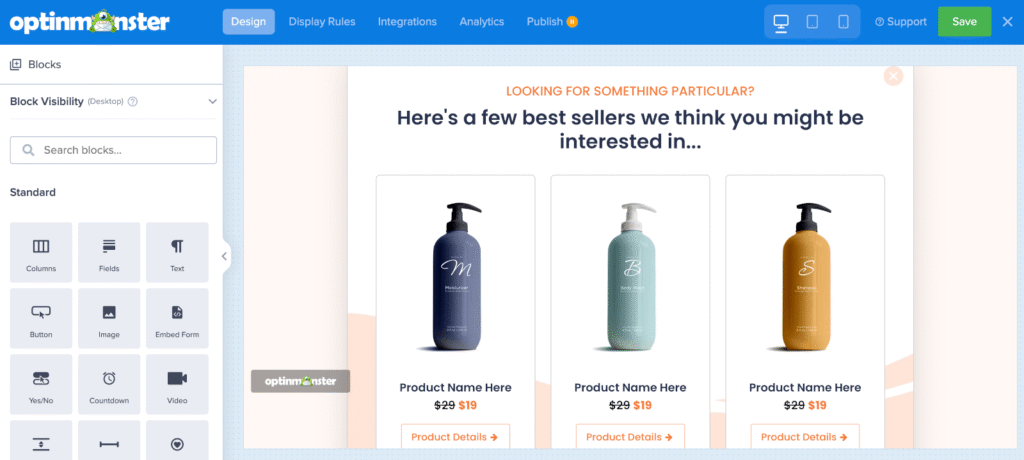
It’s also very easy to set up with OptinMonster. For full details, see our guide on how to create a WooCommerce popup to cross-sell.
4. Let Shoppers See What They Just Missed
Most websites hide their sold-out items. But websites like Booking.com leave them right there on the page, in red, above the ones you can still book.
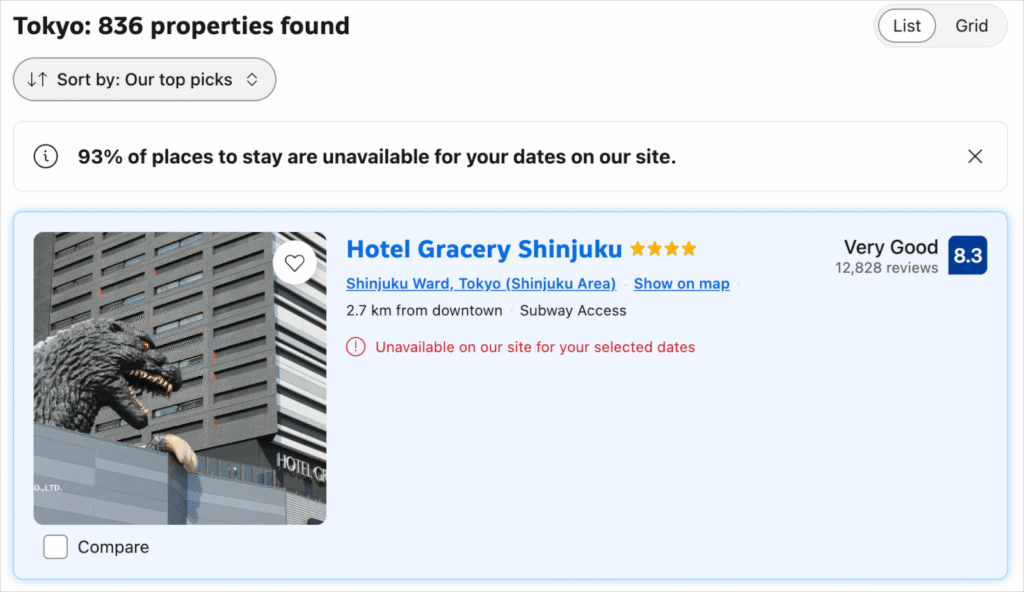
Why it works: a sold-out listing proves the deadline was real, right at the moment somebody’s weighing up whether to wait or buy somewhere else. That means every other scarcity claim on that page gets more believable.
Keep in mind only to do this where something really did sell out of. If you grey out items that you just stopped stocking, people will learn that the signal means nothing and they’ll ignore the next real one.
Related: How to improve conversions with “out of stock” pages.
5. Show How Few You Have Left
For this to work, you need to put the actual number on the page. Not “limited stock”, which almost everybody scrolls past, but the real count.
Why it works: a specific number can be checked and shoppers know it, so “Only 3 left” invites somebody to come back tomorrow and see. This is exactly the behavior you want and exactly why the vague version does nothing.
Amazon does it on the product page:
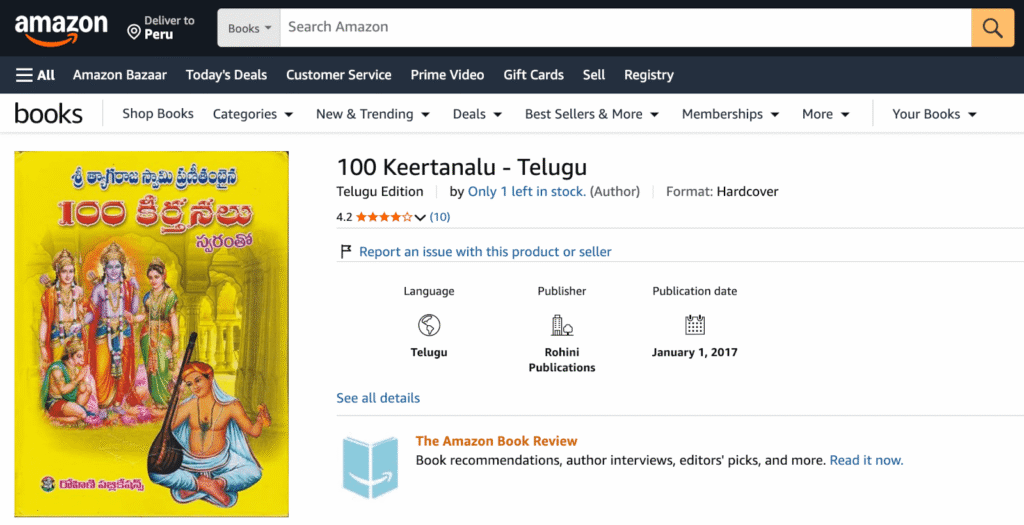
Make sure to only show the count once it drops below a threshold, because “847 in stock” removes the FOMO entirely. Switching the message on at, say, ten units can actually motivate people to buy.
If you’d rather not show inventory numbers at all, then a floating bar carrying the same message on your high-intent pages gets you most of the way there.
Read next: 34 real-life examples of scarcity marketing
6. Give Your Offer a Real Deadline
A deadline adds pressure for a visitor to make a decision. This is because waiting until tomorrow means they could lose out on the product.
Why it works: loss aversion. We work harder to avoid losing something than to gain the same thing, so a discount that ends on Friday works better than the same discount with no end date.
Amazon displays the countdown straight on the deal:
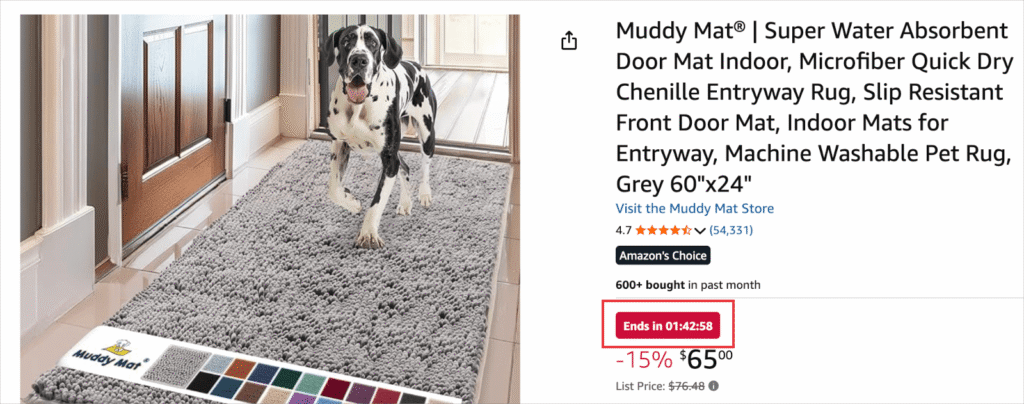
To set this up on your own website, I recommend setting up a countdown popup. This is the same strategy we use for our Black Friday sales, and it works well.
A countdown popup carries that deadline with the visitor as they move around your site:
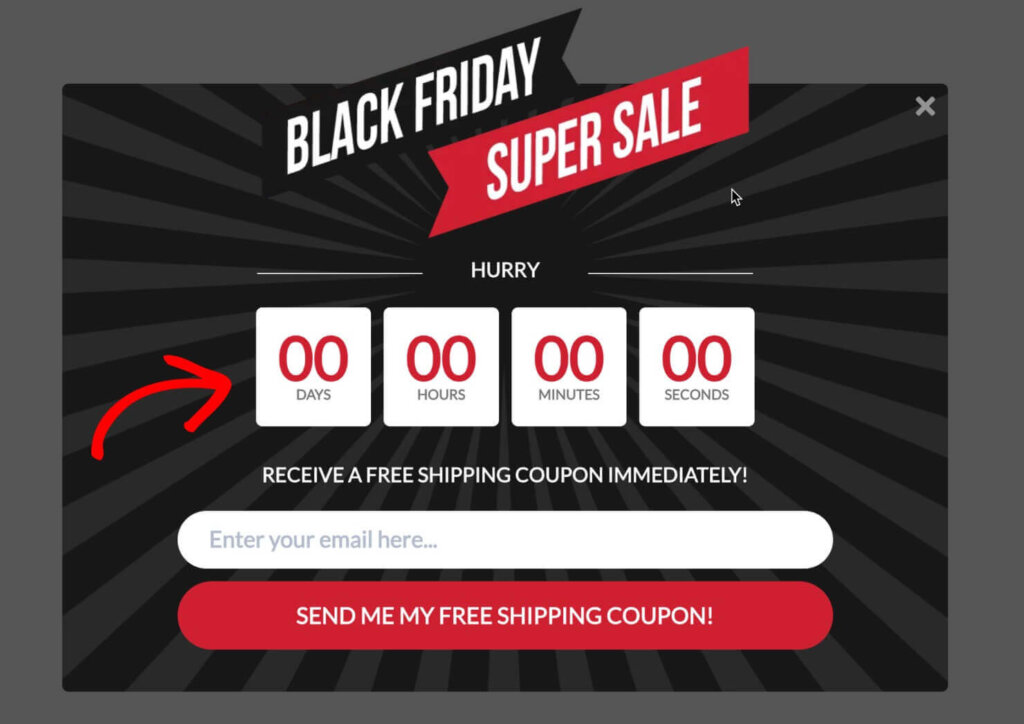
Pro tip: never put a countdown on an offer that doesn’t end. We pulled countdown timers out of some of our own campaigns for this reason, and the rule is now that one only goes back if the discount really expires.
Read next: How to create urgency in marketing
7. Make Your Offer Feel Genuinely Exclusive
Exclusivity is designed for the idea of who gets to buy rather than on how much is left. The message becomes “this isn’t for everyone” rather than “this is running out”.
Why it works: people want things more when not everyone can have them. Early access and member pricing give a buyer a reason to feel chosen, and that feeling often matters more to them than the money they save.
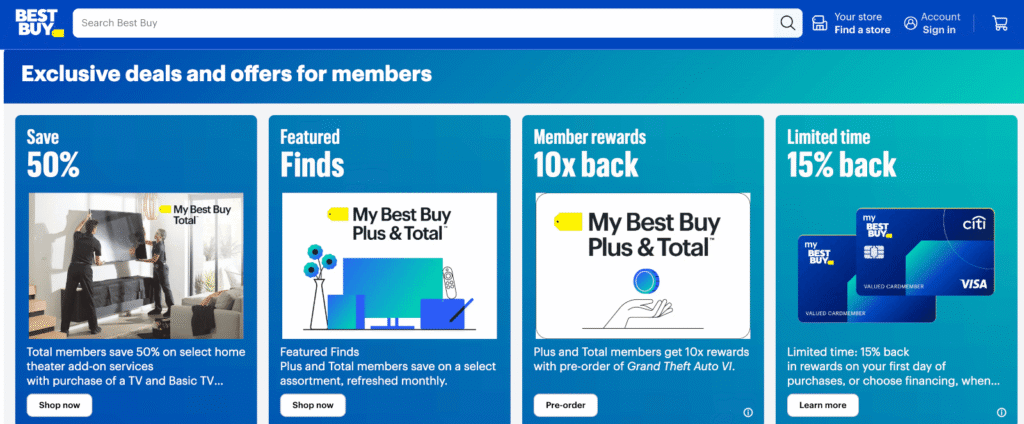
To do this on your own website, I suggest using a popup with display rules to show an early-access offer only to the people who have earned it. You can target returning visitors, people who arrived from your newsletter, or anyone who has already bought once.
Keep in mind that the offer has to actually be limited to that group. If everybody can get it by opening an incognito window, then it isn’t exclusive, and your regulars will notice.
Read next: 7 examples of successful membership websites
8. Show Your Review Count, Not Just Your Rating
A 4.6 rating tells a shopper your product is good, but adding “from 2,300 reviews” also tells them how many other people already bought it. That second number is where the FOMO comes from.
Why it works: 2,300 people have already made this decision, and your visitor hasn’t. It’s the same mechanism as the live notifications in example 2, just running over a much longer timescale.
We use TrustPulse on our own websites. It runs alongside OptinMonster rather than replacing it, because TrustPulse shows the activity while OptinMonster captures the lead.
TrustPulse also lets you show “On Fire” notifications that are great for using FOMO on landing pages and checkout pages:
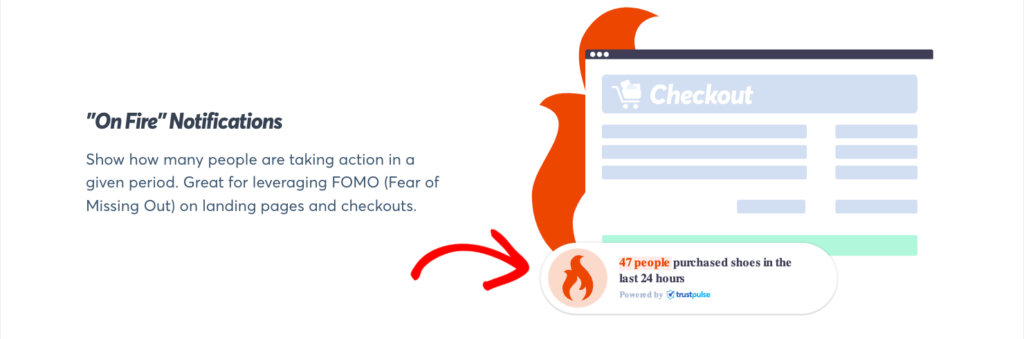
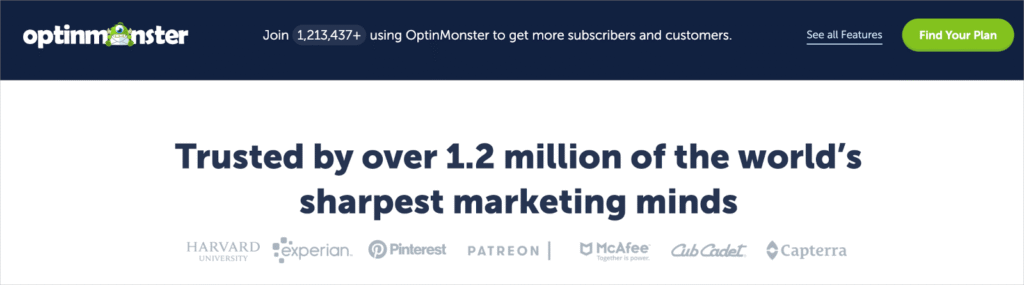
Total counts do the same job at brand level, which is why we show the total number of OptinMonster users on our own website:
Read next: Social proof statistics you should know
9. Show Real Customers Using Your Product to Promote Experiences
Another way to use FOMO tactics is to let your users help. User-generated content (UGC) lets visitors and potential customers vicariously share in the experience of using your products and services, so they want to do it too. After all, real proof from real people is going to be much more compelling than any of your FOMO advertising campaigns.
Why it works: A customer photo puts your product in a real room with real light, which is much closer to what the shopper is imagining. It also proves somebody paid full price and liked it enough to post about it.
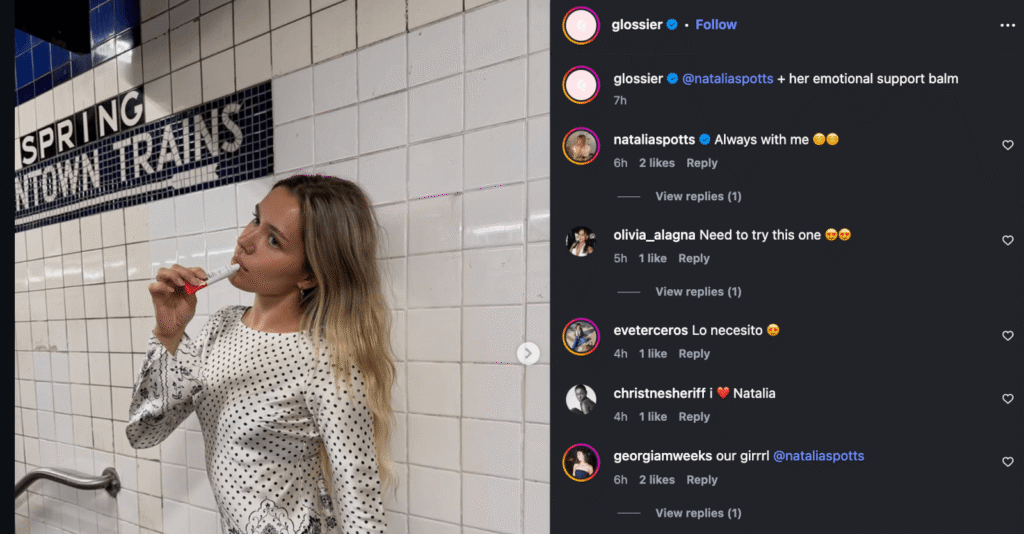
And instead of leaving all of your UGC on social media, you can seamlessly integrate it into your website using a plugin like Smash Balloon. With Smash Balloon’s Instagram Feed Pro, you can easily embed an Instagram hashtag feed anywhere on your site to showcase UGC.
It’s super simple to set up and you can completely customize your feed. You can choose from different layouts, design the feed to match your brand, hide or show likes and comments, highlight specific posts, and more.
Check out this guide on how to add an Instagram hashtag feed to WordPress for more details.
10. Reward the First People to Buy
Giving a freebie or a discount is a good way to attract customers. However, you can make it even more effective by limiting that reward.
Offline, you see this tactic when stores offer a gift or special discount to the first 100 customers, and that usually makes hundreds of people line up.
Why it works: capping by position instead of by date makes the deadline impossible to work out. Nobody knows whether they have until Friday or until lunchtime, and that uncertainty is even more urgent.
A classic example of this is an “early bird” deal like this one:
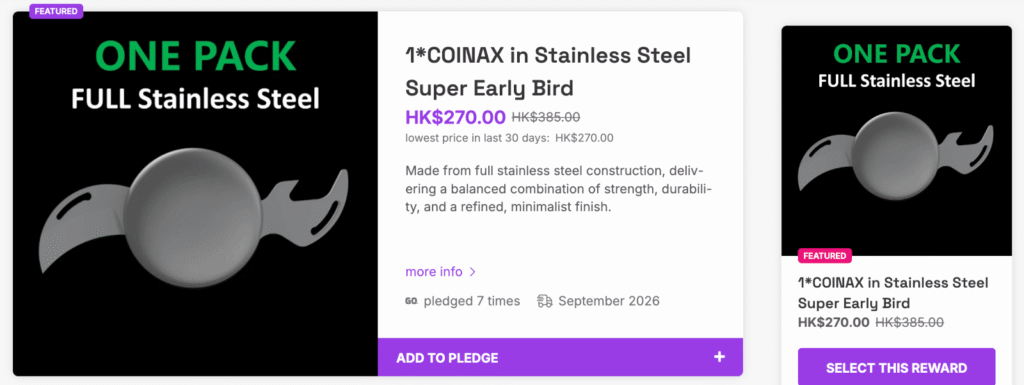
To run this strategy yourself, I recommend announcing the cap in a popup when somebody first lands, then keeping it visible with a floating bar as they shop. That way the count is in front of them at the moment they add to cart, not just on the page they arrived on your website.
Read next: 23 sales promotion examples to boost your sales
11. Bring FOMO Into Your Emails
Many of the FOMO marketing examples I’ve discussed so far work in the inbox too, and you have one advantage there that the on-site versions never get. You already know who you’re talking to and what they looked at.
Why it works: email is the only channel that can reach somebody after they’ve already walked away from the thing they wanted. On-site FOMO has to work on an anonymous visitor, but an email can tell one person that the exact item they saved is now down to two.
Here are some examples:
- Let subscribers know about exclusive deals or rewards.
- Tell them when items they’ve saved are about to run out.
- Remind them about items in their shopping cart with cart abandonment messages.
Pair the email with onsite retargeting so that the offer survives the click. Somebody who arrives from a “your basket expires tonight” email and lands on a page that says nothing about it will assume the offer already ended.
Read next: How to grow your email list: 23 proven and simple ways
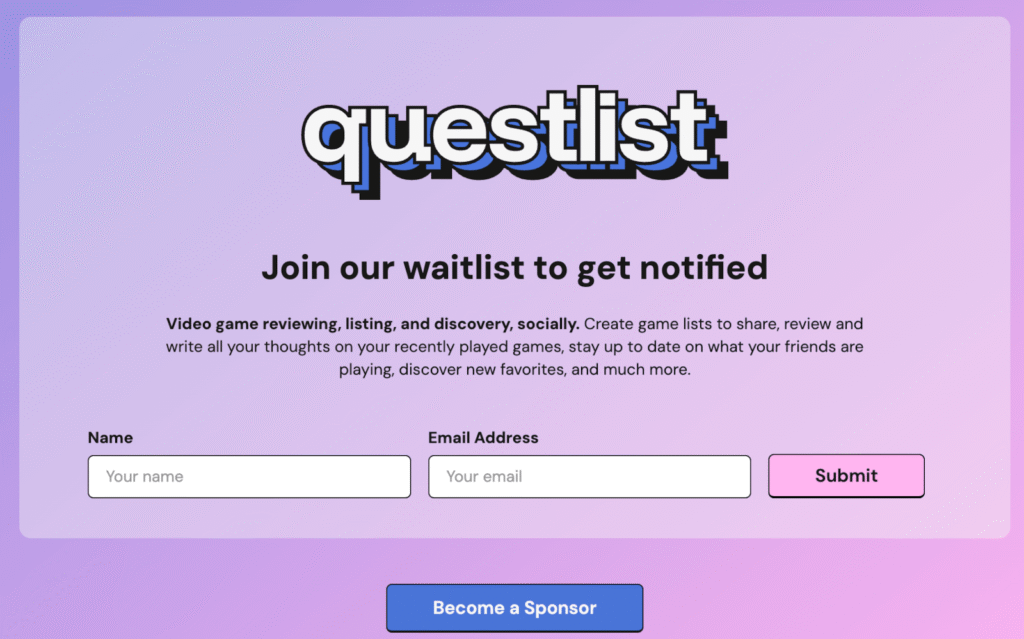
12. Turn Out of Stock Into a Waitlist
When something sells out, most websites show a grayed-out button and lose the visitor. A waitlist or a back-in-stock alert can convert the user into an email address for your email list instead.
Why it works: this is the only tactic here that runs on FOMO the customer already feels. You aren’t manufacturing any scarcity, because they have just walked into it. This makes the ask very easy to say yes to. You also get a demand signal you can use. Once 800 people have signed up, you know how many products to reorder.
This can also be a useful strategy when you’re launching a new product or service and want to build excitement around it. This is commonly used by new brands before they make their offerings public:
Read next: How to improve conversions with “out of stock” pages
13. Run a Limited Drop Instead of a Sale
With a drop, you make something available for a fixed amount of time and then stop selling it, whether or not it sold out. That’s a different thing from marking down stock you already carry.
Why it works: once you discount regularly, people learn to hold off until the next sale. Drops teach the opposite habit, because the only way to get the thing is to buy it while the window is open.
The window of opportunity is the product here, rather than pressure added on top of one.
To run one, I recommend opening a pre-launch signup popup before the drop goes live, then switching to a countdown popup once the window opens.
Also announce the close before you announce the open. The people who convert on a drop are the ones who knew the end date on day one, so the pre-launch signup matters far more than the launch-day popup.
Read next: How to create urgency in marketing
Where FOMO Marketing Doesn’t Work
Here are some examples of FOMO marketing that don’t work well:
- The timer that never runs out. An evergreen countdown that resets when you reload the page is the most common mistake and the most expensive one. It reduces the value of every honest deadline you set afterwards.
- Fake low stock counts. For example, “Only 2 left” on a print-on-demand product is a claim about inventory you don’t actually hold, and a shopper can disprove it by hitting refresh.
- Activity notifications with no activity behind them. Some tools will happily generate purchase popups for you. If yours can invent a customer name, then turn that setting off.
- Urgency on every page at once. Scarcity only works by contrast. So, if your banner, your popup, your product page and your basket all carry an urgent message, people will stop reading any of them.
FOMO Marketing FAQs
What are some examples of FOMO advertising?
The most common FOMO marketing examples are live purchase notifications, stock counters, countdown timers, sold-out listings left visible, review counts shown next to ratings, first-100 gifts, waitlists and limited drops.
Is FOMO marketing still used in 2026?
Yes, and arguably more than ever. Shoppers have caught on to fake countdowns and invented stock counts, and plenty of them check now. What has grown instead is FOMO tied to something you can verify, like waitlists, timed drops, real low-stock alerts and live purchase activity. The psychology works exactly as it always did, but people have much less patience for being tricked.
What is FOMO vs JOMO?
FOMO is the fear of missing out. JOMO, the joy of missing out, is choosing not to join in and feeling good about it. For marketers, JOMO is a warning sign. An audience worn down by constant urgency starts to enjoy ignoring you, and once that happens, adding more urgency only makes things worse.
Is FOMO marketing ethical?
It comes down to whether the scarcity is real. Telling somebody that a genuine sale ends on Friday is information they need. Telling them a timer is running when it resets on refresh is simply a lie that happens to be about a discount.
What are FOMO ads?
FOMO ads are built around what the viewer could lose rather than what they could gain. That might be a closing window, a limited run, a price about to rise, or a crowd already buying. The creative is doing the same job as the on-site tactics above, just earlier in the funnel.
How do you create FOMO without annoying people?
Use one signal per page, tie it to something a customer could check, and keep it off the pages where they’re already converting. Most FOMO backfires because of sheer volume rather than any single tactic. A banner, a popup and a product-page timer all firing at once will cancel each other out, so pick the one that fits the moment and let it do its job.
Get Started With FOMO Marketing
OptinMonster lets you create the popups, floating bars, countdowns and waitlist forms behind FOMO marketing campaigns, along with the display rules that decide who sees them and when.
Disclosure: Our content is reader-supported. This means if you click on some of our links, then we may earn a commission. We only recommend products that we believe will add value to our readers.
Add a Comment