
How to Make Money on Shopify in 2026 (18 Proven Methods!)
Last updated on
by
TL;DR: The Top 10 Ways to Make Money on Shopify (Editor’s Picks)
| Rank | Shopify Model | Best For | Why This Works | Key Advantage |
|---|---|---|---|---|
| 🥇 | Start a Shopify eCommerce Store | Entrepreneurs & brands | Shopify remains the most flexible way to sell physical and digital products globally | Full ownership and long-term scalability |
| 🥈 | Sell Digital Products | Creators & educators | Digital products have low overhead and high margins | No inventory, instant delivery |
| 🥉 | Single-Product Shopify Funnels | Solopreneurs | Focused offers convert better than broad catalogs | Simple setup, easier optimization |
| 4 | Subscription + Membership Stores | Coaches & communities | Recurring revenue creates predictable income | Stable monthly cash flow |
| 5 | Build a Shopify App or Theme | Developers | Shopify’s app ecosystem keeps growing | High earning potential per client |
| 6 | Buy or Acquire a Shopify Store | Investors | Skip the setup phase and start with existing revenue | Faster path to profitability |
| 7 | AI-Generated Products (Digital & POD) | Creators & side hustlers | AI lowers the barrier to product creation | Speed and experimentation |
| 8 | TikTok Shop + Shopify Integration | Social-first sellers | In-app shopping reduces buying friction | Access to high-intent mobile traffic |
| 9 | User-Generated Content & Creator Collabs | DTC brands | Trust-driven sales outperform ads | Authentic social proof |
| 10 | Freelancing Services for Shopify Merchants | Service providers | Shopify merchants constantly need help | Low startup cost, skill-based income |
Are you looking for new ways to expand your revenue? If that’s true, in this blog, we’ll share actionable tips on how you can make money on Shopify.
Every year, thousands of eCommerce stores are launched globally. Thanks to the growing popularity of online shopping, Shopify has emerged as a market leader in the global eCommerce industry.
Shopify owns 32% of the eCommerce platform market, making it among the top 5 eCommerce platforms in the world. Brands like Allbirds, Gymshark, and Kylie Cosmetics rake in over $200 million in yearly revenue through their Shopify eCommerce stores.
But setting up an eCommerce store is one of the many ways to make money on Shopify. If you have special skills like photography, social media marketing, or copywriting, there are plenty of other ways for you to monetize your skills to make money with Shopify.
Over the years, Shopify has grown so big that it now has a ton of opportunities for new entrepreneurs to make money online. If you’ve been looking for new business ideas to make money online with Shopify, we’ve all the answers for you.
In this post, we’ll cover how to make money on Shopify in one of the following ways:
- Start a Shopify eCommerce Store
- Buy an Existing Shopify Store
- Build a Shopify Dropshipping Business
- Become a Shopify Affiliate Marketer
- Be a Shopify Expert
- Start a Fashion Brand
- Offer Product Photography Services to Shopify Businesses
- Build a Shopify App or Theme
- Monetize Your Social Media Following
- Offer Freelancing Services
- Sell Print-On-Demand Products
- Set Up an Online Storefront for a Local Business
- Sell Digital Products
- TikTok Shop + Shopify Integration
- AI-Generated Products (Digital & POD)
- Subscription + Membership Stores
- UGC & Creator Collabs
- Single-Product Shopify Funnels
- Frequently Asked Questions About Making Money on Shopify
Start a Shopify eCommerce Store
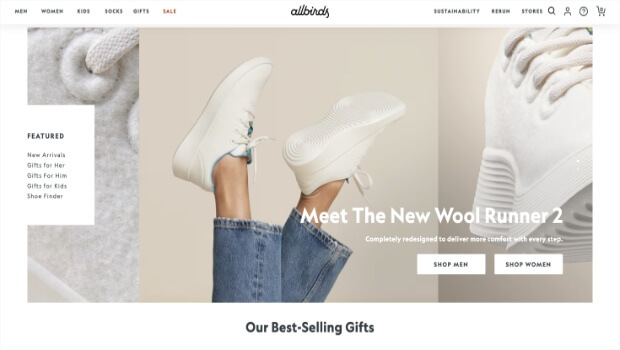
Hands down, launching an online store with Shopify is the #1 way to make money. And it’s easier than you think. It’s not a fluke that Shopify tripled the number of stores that were launched on its platform during the 2020 COVID-19 pandemic.
Shopify makes it really easy for first-time entrepreneurs to create a website and launch their brand-new eCommerce outlet. The platform has all the right tools in place to help you:
- List new products
- Add images to a gallery
- Optimize your product pages for search
- Add vendors
- Track inventory
Shopify’s ease of use in building a new eCommerce site is what has enabled more than 1 million businesses to use Shopify as their choice of eCommerce platform across 175 countries. And if you make the most of the right set of plugins available in the Shopify App Store, you can target the right buyers and generate more leads for your online business.
However, it does cost some money to build and maintain a Shopify store online. Here are a few things that you would need to consider in terms of investment:
- Shopify monthly subscription fee
- Domain name and hosting
- Website design
- Products
- Marketing and advertising
- Transaction fees
But if you keep checking all the right boxes and grow your Shopify store profitable, you can be among the top 100 Shopify businesses that earn more than $1 million in sales revenue every year.
Pro-tip: To grow your Shopify business, you will need a reliable way to engage website visitors and convert them into buyers. Use OptinMonster. Make use of the best Shopify apps to improve your lead generation, enhance social proof, start email marketing, and do a lot more.
Buy an Existing Shopify Store
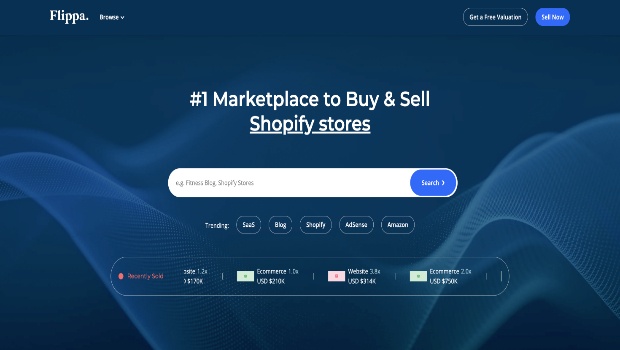
If you don’t want to go through the hassle of starting a Shopify store from the ground up, that’s perfectly fine. You can always acquire an existing Shopify store and make profits from it. There are quite a few websites on the Internet that let interested buyers connect with the right Shopify owners who want to sell off their online stores.
Studies estimate that there are between 12–24 million eCommerce stores globally, many of them in Shopify. If you can find the right sellers eager to sell their Shopify stores, you can choose from a wide variety of online stores on the platform.
Until 2022, Shopify had its own Exchange Marketplace that facilitated eCommerce store buying and selling. Unfortunately, they closed down the marketplace after 5 years of operations.
You can still use 3rd party websites like Flippa or Empire Flippers that bridge the gap between Shopify store owners with buyers who want to start a Shopify business.
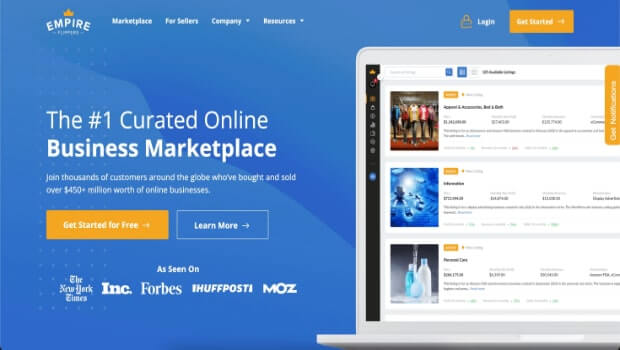
These 3rd party websites have a large number of website flippers who specialize in building a website, making it profitable, marketing it, and selling it at a higher margin. If you have past expertise in building small business websites, ranking them on search results, or buying and selling businesses, you can also consider doing website flipping as a Shopify business.
A word of advice: Always do the due diligence to validate the following information before buying a running Shopify store:
- The store’s market value
- Reasons for selling
- Monetization channels
- Non-compete clauses
- Other legal standings
We recommend you also thoroughly review their CRM data, ongoing marketing campaigns, and integrations and request a transfer of ownership during the sales negotiation.
Build a Shopify Dropshipping Business
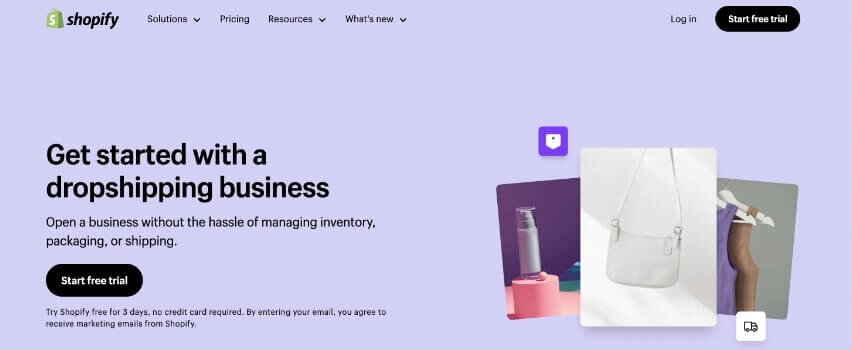
In recent years, dropshipping has emerged as one of the easiest ways for aspiring entrepreneurs to make money online. Unlike other forms of eCommerce ventures, dropshipping doesn’t require you to buy, store, or even ship products yourself.
In Shopify, dropshippers only represent 7.77% of the business landscape. This means the majority of buyers prefer to own the inventory management and ship the products directly from a physical location that they control instead of relying on middleman vendors.
In other words, it’s not as competitive to become a dropshipper in Shopify as opening an eCommerce store. You can run a successful dropshipping business on Shopify sitting at home, out of your laptop, without ever seeing or touching the products you’re selling.
You just have to build a robust Shopify store, market your products well, and develop reliable logistics with the manufacturers. Isn’t that neat?
There are many other advantages of starting a dropshipping business, be it on Shopify or WordPress:
- You don’t have to make a hefty investment upfront since dropshipping doesn’t require you to handle inventory, storage, or shipment.
- You don’t have to pay a manufacturer or a vendor anything until you sell the products.
- You can scale your business by expanding your partnerships with new manufacturers without stressing over investment, inventory, and logistics.
You can mint money on Shopify if you are good at maintaining your store’s online presence, facilitating order placing and online transactions, and outsourcing the product inventory and handling to 3rd-party vendors or manufacturers.
Become a Shopify Affiliate Marketer

Many eCommerce businesses use affiliate marketing to market their platforms, and products, to new audiences. In return for spreading the word, the marketers receive a payout for every sale they enable through their affiliate network.
Shopify has an affiliate program for aspiring entrepreneurs, educators, content creators, and social media influencers. Affiliates can spread the word about Shopify stores and earn money in return. It’s free to join the affiliate marketing program, but Shopify does have specific criteria for who qualifies as an affiliate marketer.
For instance, here are some of the prerequisites that you must meet to qualify as a Shopify affiliate marketer:
- You must run your own active blog or affiliate website
- You must have built an audience relevant to Shopify businesses
- You must create original content like courses, blogs, videos, or guides
- You must have experience in commerce, entrepreneurship, or Shopify.
The program is essentially a commission-based program for you to monetize your audience and help Shopify grow its empire. There’s no limit to how much commission you can earn through the program, or the maximum number of Shopify merchants you can refer to.
Officially, Shopify doesn’t reveal how much it pays for each referral. Going by the testimonials of Shopify affiliates in our network, we know that Shopify pays about $150 for each qualified referral. That means for every person who signs up for a paid plan on Shopify through your affiliate tracking code, you will earn a fixed commission of $150.
Pro-tip: Want to get started with affiliate marketing? Here are some more resources to help you delve deeper into the world of affiliate marketing:
- Beginners Guide: Affiliate Marketing Tips & Tools (That WORK)
- 18 Affiliate Marketing Statistics All Marketers Must Know
- 15 Best Affiliate Marketing Tools to Drive More Revenue
- Earnings Per Click: How to Win Big at Affiliate Marketing
- 15 Affiliate Marketing Tips to Increase Your Income
- OptinMonster Affiliate Program
Be a Shopify Expert

Do you have experience building or growing eCommerce stores in the past? Or maybe you have prior experience related to Shopify. If you possess relevant skills in growing businesses online, you can certainly monetize your expertise to make money with Shopify.
Until recently, Shopify had an Experts Marketplace where you can find experienced professionals, agencies, and freelancers who offer services that are sought-after by Shopify merchants. In October 2023, Shopify announced the rebranding of Experts Marketplace to Shopify Partners.
The services that you can find (or sell) under the Shopify Partners Directory include, but are not limited to:
- Marketing and sales services
- Services related to helping merchants set up their stores
- Website development and troubleshooting
- Copywriting
- User experience (UX) design and branding
If you can offer any of those services, you can apply to Shopify Partners Directory as a service provider.
In case you’re wondering, Shopify is replacing the Experts Marketplace with the partners portal for a good reason. With the new improvements in its experts marketplace, Shopify now makes it easier for 3rd party experts to:
- Be more discoverable to Shopify merchants looking for specific expertise.
- Keep 100% of the profit. Shopify won’t take a 10% cut like it did for Experts Marketplace.
- Connect with Shopify store owners through a lead form in the Partners page directory.
- Communicate and invoice clients outside the Shopify ecosystem.
Start a Fashion Brand
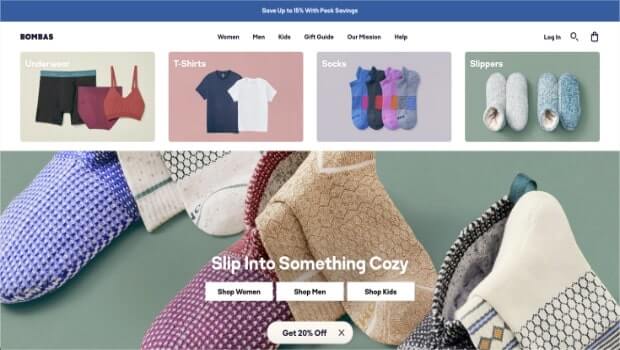
Shopify is a lucrative place for people interested in creating their own online fashion brand. Most of the eCommerce brands that are most profitable in the Shopify platform are fashion, clothing, or accessories brands. Brands like Allbirds, Bombas, and Kith make upwards of $100 million in yearly revenue through their fashion-related Shopify stores.
Shopify has a global presence, a baked-in ads network to market your products, its home-grown fulfillment network, and many other opportunities to help you grow your business.
You can take advantage of print-on-demand dropshipping brands like Trendsi, Printful, and CJdropshipping to outsource the manufacturing, design, and shipping of the products to simplify your business growth.
To be fair, these do incur additional costs. Expect to pay from $0.50 to $5.00 per click for each Shopify ad that you publish. Similarly, Printiful or CJdropshipping come with their own set of costs.
But these investments are worth the money until you master the skills of being profitable on Shopify and find cost-effective alternatives to grow your business.
Setting up athlete wear and fashion brand accessories has also gained traction in Shopify in recent years. If you can partner with the right vendor and relentlessly market your products to the right audience, you can build a profitable fashion brand on Shopify either on your own or with the help of 3rd party dropshipping vendors.
Offer Product Photography Services to Shopify Businesses

Product photography is one of the most in-demand services in the eCommerce industry, and not just limited to Shopify businesses. And its growing demand is justified, given that 83% of online buyers consider product images to be an important factor in their purchase decision.
Between managing their vendor relationship to finding new avenues to market their products, most Shopify merchants have a hectic schedule. The majority of store owners don’t have enough time or the necessary skills required to take photographs of their products, a critical aspect in making their products attractive to buyers.
Even if they are dropshippers with enough time on their hands, eCommerce store owners aren’t really interested in taking product photographs themselves when they know that the end result isn’t going to be as good as that from expert photographers.
If you are an experienced photographer, you can apply to join the Shopify Partners Directory and sell your expert services to interested Shopify merchants. On average, product photographers can charge from $100 – $300 per hour or $10-$20 per photo.
More seasoned photographers can negotiate the price up and charge as high as $3000 per day, depending on the client’s requirements and budget. Given that a typical Shopify store has hundreds of products on its website, that’s an impressive amount of money in return for your expertise.
Build a Shopify App or Theme
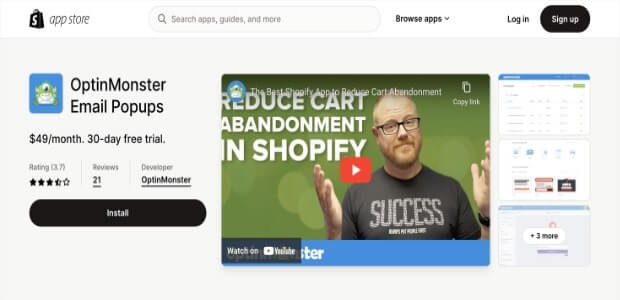
If you thought that building apps, themes, or templates were only limited to WordPress sites, you’ll be pleased to know that Shopify also offers similar attractive opportunities on its platform.
Given its exponential growth in the last 17 years and the ever-expanding number of stores in its platform, Shopify has a massive demand for developers who can build apps or design new website themes.
Consider this: The average Shopify merchant has 6 apps installed on their online store. And with hundreds of new stores opening in Shopify every year, there are plenty of opportunities for app developers to find clients who need technical support in setting up new apps. Similarly, the growing number of apps on Shopify also means Shopify merchants will encounter a diverse set of technical challenges while growing their businesses and will want to hire experts to troubleshoot their problems.
There’s never been a better time to build apps and themes for Shopify stores. The good news is, Shopify has all the tools and helpful content in place to help you succeed in building cool apps.
You can get familiar with Polaris, Shopify’s open-source design system for 3rd-party developers, to start developing apps that integrate with Shopify stores. Or you can join Shopify’s developer community to learn about its APIs, SDKs, and other tools for building storefronts, custom flows, and integrations.
You can make anywhere between $38 and $61 per hour as a Shopify developer. The rate depends on many factors like your experience, the client’s budget, the complexity of a project, and your negotiation skills.
Monetize Your Social Media Following
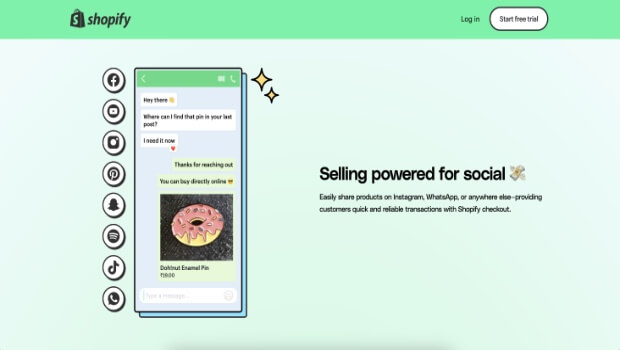
In recent years, online shopping has emerged as a big winner than in-store shopping because buyers find eCommerce more convenient, more personalized, and cost-efficient. More and more buyers today prefer to shop online and get recommendations from social media before making a buying decision. In fact, 74% of buyers rely on social media networks to make purchase decisions.
If you already have a sizable audience on social media sites like Facebook, you can monetize that to your advantage. Shopify’s Starter plan offers you a way to share Shopify products on Facebook, WhatsApp, Instagram, and other social media channels for people to buy.
The plan costs $20 a month and lets you create special links that you can add to your social media bio to drive buyers to Shopify stores.
Offer Freelancing Services
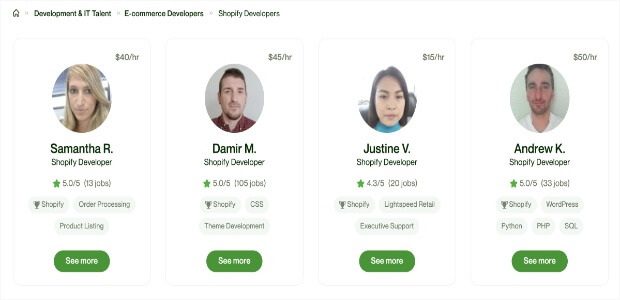
If you’re already a freelancer who is looking for an additional source of income, offering your freelancing services to Shopify merchants can be a great match! Fast-growing Shopify stores are always on the lookout for professionals who can help them write product descriptions, design their web store, or rank in search engines.
And don’t worry, you don’t have to have prior Shopify experience to match with clients. You can always find short- and long-term client projects in the Shopify Partner directory if you have transferable skills like writing, designing, development, or search engine optimization (SEO).
Shopify has its own SEO workings built-in within the platform to help store owners drive more visibility to their business. From improving the user experience to running high-intent content marketing campaigns, there’s a lot you can do to increase traffic to a Shopify site and generate more revenue.
Sell Print-On-Demand Products
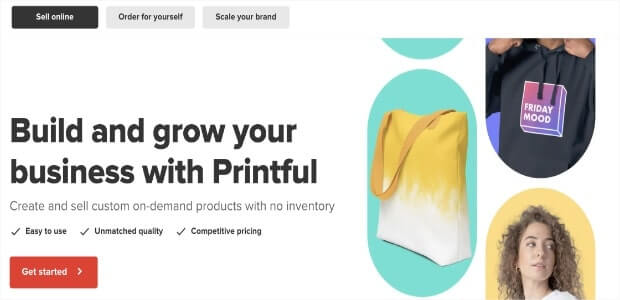
Previously, we discussed how you can build a store or dropshipping business on Shopify by partnering with print-on-demand vendors like Printful and Trendsi. If you aren’t interested in running your own Shopify store, you can always reach across the table and become a print-on-demand vendor.
Print-on-demand products are really popular among Shopify stores, especially the dropshippers. And just like in dropshipping, you don’t really have to stock up on products beforehand. Like the name implies, you have to start manufacturing (or supplying) products only after you start generating demand for certain products.
This makes it really easy for you to calculate the exact cost of your inventory and scale the product line as per the demand.
Shopify offers support for 3rd party print-on-demand vendors to integrate with the platform and be listed in its App Store.
If you’re seriously considering building, or expanding, your print-on-demand business in the Shopify platform, here are some product categories that have a growing need for 3rd-party suppliers:
- Mugs
- T-shirts
- Jewelry
- Accessories
- Phone cases
- Wall art
- Water bottles
- Towels
- Books
As an aside, here’s a tutorial on how to build a print-on-demand shop online in WordPress. Although the blog is specific to WordPress websites, a lot of tips apply for beginners who want to start a print-on-demand business in Shopify as well.
Set Up an Online Storefront for a Local Business

If you already have a profitable business offline, you can create a Shopify storefront for it and grow your business potential beyond the geographical limitations. This is extremely useful for businesses that are going through tough competition (like grocery stores or clothing businesses) or seeing a decline in demand (like handicraft shops or bookshops).
Offline businesses are suffering because they can’t reach people from many touchpoints, offer buyers the same level of personalization like online businesses, and adjust their sail like an eCommerce store can.
With a Shopify storefront, you can expand the reach of your local businesses to a bigger geography. You can use SEO to rank higher in search engines, use tools like Google Business Profile to make your store more discoverable, or use advanced geo-location targeting tools to drive more footfalls to your offline store.
Local brands like Vegan Supply, WIRTH Hats, and Caffe La Tana have expanded their reach beyond their geographical locations by opening up their Shopify storefronts and marketing themselves to customers globally.
Pro-tip: People drop off from the websites they are browsing all the time. Use an exit intent popup for your Shopify store to prevent people from abandoning your website and engage them with enticing offers to increase sales.
Crossrope, an online fitness brand, used a Yes/No campaign to recapture 7.65% of traffic that was lost to abandoned checkouts on their website.
Sell Digital Products
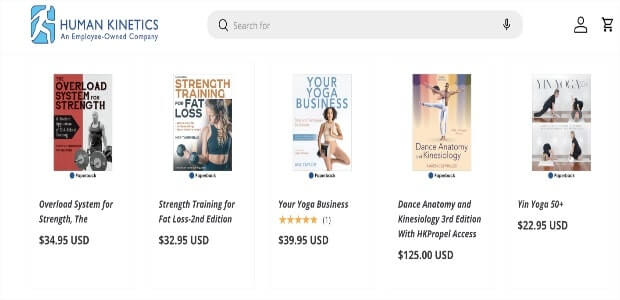
Fashionable clothes and kitchenware are not the only products that are profitable in Shopify. If you are a prolific content creator, you can monetize your skills to earn steady revenue from Shopify. The content you can create includes digital products such as:
- Ebooks
- Online courses
- AI-generated portraits
- Printables like calendars and stickers
- Original music for download
- Games
Basically, it can be any digital product that buyers can download to use. You can use Shopify’s Digital Downloads app to upload your original digital product to your online store and share a link to download with people when they buy the product.
Of late, a lot of digital creators are bullish on selling non-fungible tokens or NFTs (blockchain-based digital products that can’t be replicated) on Shopify. Like other physical products, you have the full discretion to set the cost of a digital product on Shopify and sell as many of them as you would like.
P. S. — Want more ideas on what sells on Shopify? Here’s a great list of the best digital products that you can sell online, with real-world examples.
Want to know what’s working right now? Check out the latest Shopify monetization trends for 2026.
TikTok Shop + Shopify Integration
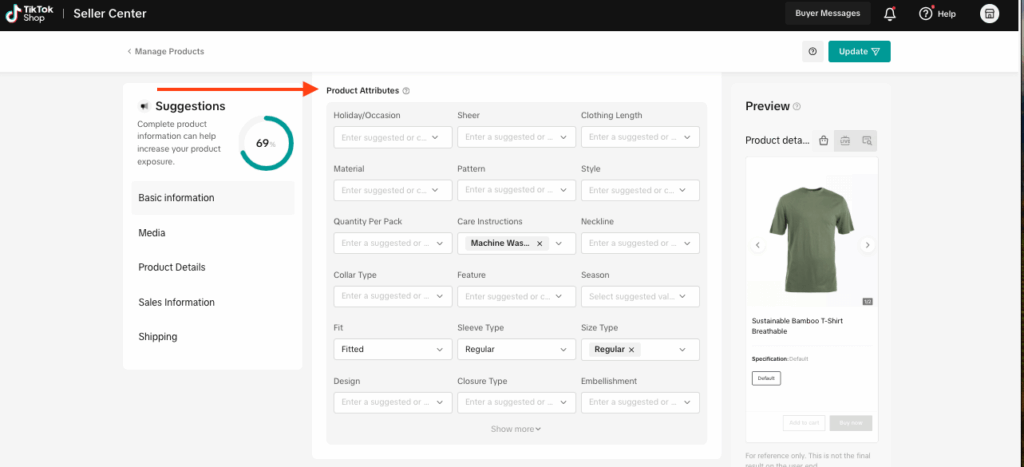
TikTok has quickly become one of the most powerful product discovery platforms for eCommerce, and Shopify makes it easy for merchants to sell directly inside the TikTok app. Instead of sending users through multiple steps, TikTok Shop allows buyers to browse, review, and purchase products without leaving the platform.
This creates a low-friction buying experience, especially for mobile shoppers who prefer short-form video content over traditional product pages. Shopify merchants can sync their product catalog with TikTok, manage inventory from one dashboard, and track performance across both platforms.
For sellers who understand trends, creator marketing, and short-form video, TikTok Shop paired with Shopify offers a fast-moving but highly scalable way to generate sales in 2026.
AI-Generated Products (Digital & POD)
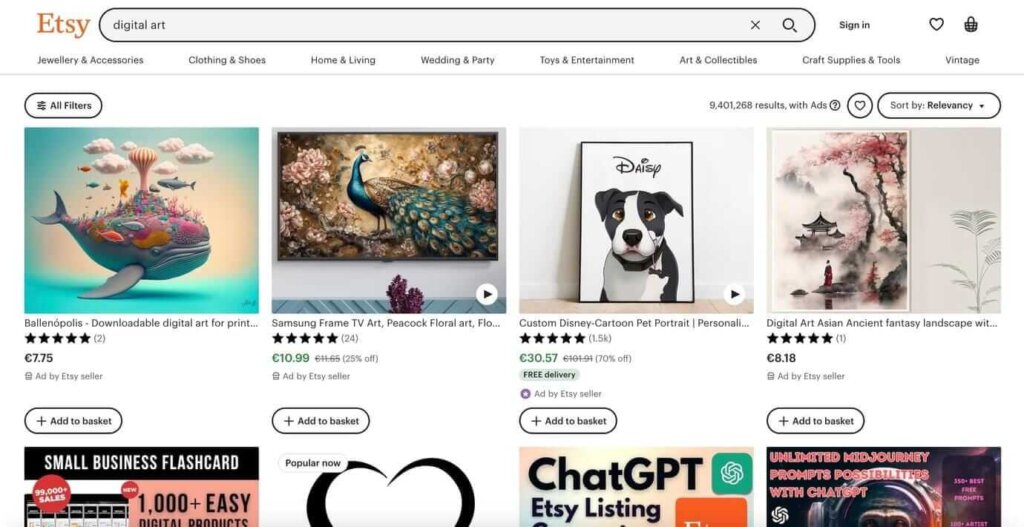
AI tools have lowered the barrier to entry for creating sellable products on Shopify. Even without design or writing experience, creators can now produce digital downloads, print-on-demand designs, and visual assets at scale.
Popular AI-powered product categories include planners, workbooks, wall art, templates, and branded merchandise. These products work especially well because they require little to no inventory and can be refined quickly based on customer feedback.
That said, long-term success comes from curation and differentiation. Merchants who combine AI-generated assets with real-world insights, niche expertise, or bundled value tend to outperform those relying on generic outputs alone.
Subscription + Membership Stores

Subscription-based businesses continue to grow because customers value convenience and ongoing access. Shopify now supports recurring payments natively, making it easier than ever to launch membership programs or subscription products.
Merchants use this model to offer curated product boxes, premium content libraries, online communities, or ongoing coaching programs. Predictable monthly revenue also makes it easier to plan inventory, marketing, and long-term growth.
When paired with strong onboarding and email follow-ups, subscription and membership stores can become one of the most stable and profitable Shopify business models in 2026.
UGC & Creator Collabs
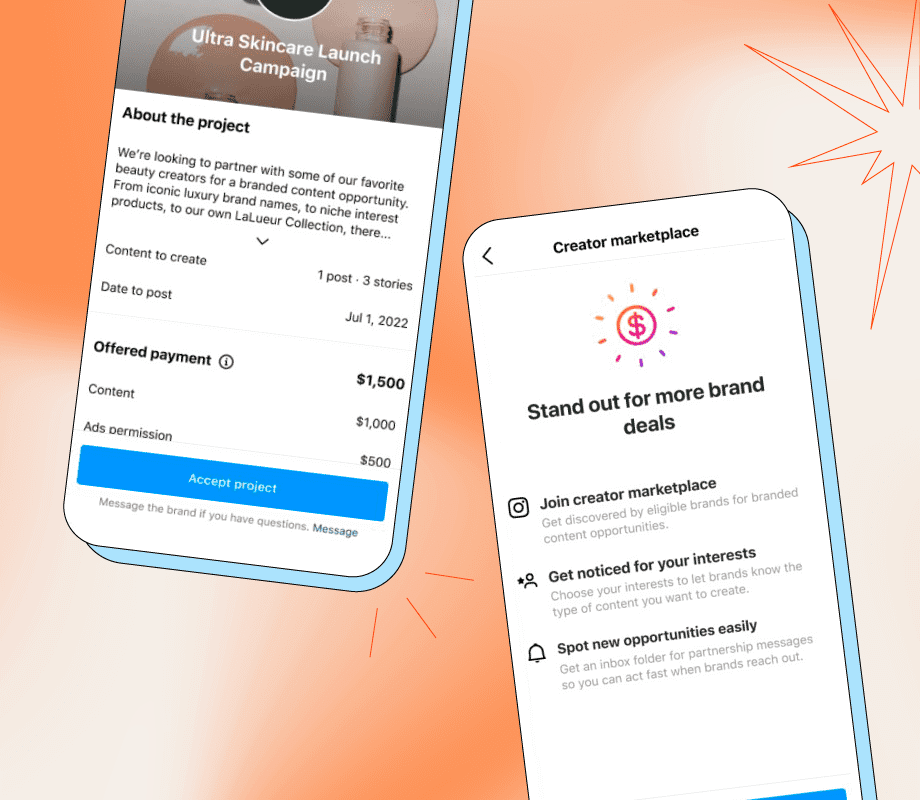
User-generated content (UGC) and creator partnerships have become essential trust signals for online shoppers. Customers are more likely to buy when they see real people using, reviewing, and recommending products.
Shopify merchants can collaborate with micro-influencers, brand advocates, and existing customers to create authentic content that fuels social media, product pages, and email campaigns. These collaborations often cost less than traditional advertising while producing higher engagement.
In 2026, brands that successfully turn customers into promoters gain a compounding advantage through referrals, repeat purchases, and long-term brand loyalty.
Single-Product Shopify Funnels
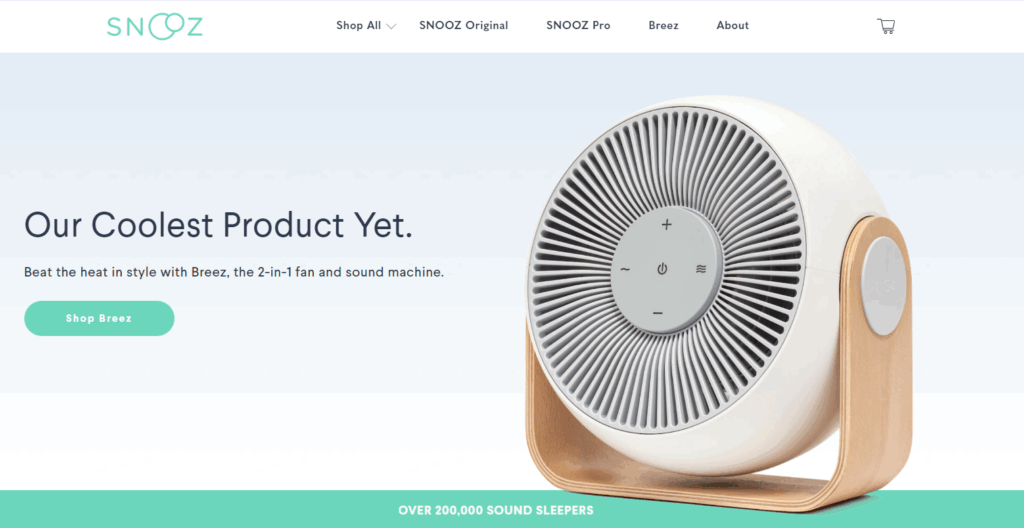
Single-product stores focus on selling one core offer through a dedicated landing page and optimized checkout flow. Instead of overwhelming visitors with multiple choices, this approach centers the entire experience around a single problem and solution.
These funnels often perform well when combined with upsells, limited-time bonuses, and email capture. By testing headlines, offers, and messaging, merchants can steadily improve conversion rates without increasing traffic.
For Shopify sellers who value simplicity and speed, single-product funnels remain one of the most effective ways to generate revenue in 2026.
Want to implement these strategies with high-converting popups, quizzes, or countdown timers?
Try OptinMonster — the #1 conversion tool for Shopify marketers.
Frequently Asked Questions About Making Money on Shopify
1. Can you really make money with Shopify in 2026?
Yes — and more people are doing it than ever. With tools like TikTok Shop, AI-generated products, and native subscriptions, Shopify has become a go-to platform for creators, solopreneurs, and eCommerce brands. Your success depends on choosing the right monetization model and building an audience through consistent marketing.
2. What’s the easiest way to start making money on Shopify?
The easiest low-risk option is starting a print-on-demand store or selling a single digital product (like a guide or template). You don’t need inventory or upfront investment. Pair it with lead generation tools like OptinMonster to grow an email list that converts.
3. How much money can a beginner make on Shopify?
Beginner earnings vary. Some sellers make a few hundred dollars/month in their first 90 days, while others scale to 5-figure months within a year. Success depends on:
- Product-market fit
- Traffic quality
- Conversion strategy (popups, email, bundles)
4. What tools do I need to make money on Shopify in 2026?
Here are essential tools for success:
- OptinMonster: Convert traffic into subscribers and buyers
- Klaviyo or Omnisend: Email marketing
- Shogun or Zipify: Build landing pages and funnels
- Printify or POD partners: For on-demand fulfillment
- TikTok Channel App: Sell on TikTok Shop
5. How can I drive traffic to my Shopify store for free?
Start with content marketing, SEO blogs, TikTok videos, Pinterest pins, and niche communities (like Reddit or Facebook Groups). Use OptinMonster to capture that traffic before it bounces and nurture leads through email.
Next Steps: Making Money with Shopify Needs Action
Whether you’re a budding entrepreneur, a marketer, a developer, a photographer, or a content creator, Shopify provides opportunities for everyone to leverage their skills and expertise to generate income on its platform.
If you enjoyed this article, we recommend you read through other resources related to growing your business on Shopify:
- Shopify Conversion Optimization: More Sales From Your Current Traffic
- Best Shopify Apps To Increase Sales: Free & Paid
- Shopify SEO: 7 Steps to Rank Your Store #1
And if you’re serious about your Shopify store, growing your email list, and increasing conversions, try OptinMonster risk-free with our 14-day money-back guarantee.
Written by Farjad A.
Farjad is a SaaS content strategist and SEO lead working with OptinMonster to help marketers grow faster through data-backed content and proven conversion tools. With deep experience in eCommerce and lead gen, he specializes in turning blogs into scalable growth channels.
Disclosure: Our content is reader-supported. This means if you click on some of our links, then we may earn a commission. We only recommend products that we believe will add value to our readers.
Add a Comment