
14 Best Competitor Research Tools in 2026 (SEO, Social and Web)
Last updated on
by
TL;DR:
The best all-around choice for SEO competitor research is Ahrefs. For website traffic intelligence, Similarweb leads the pack. For social media analysis, Sprout Social is the strongest option. If you want one tool that covers SEO and paid search together, Semrush is your best bet. For free options, Google Alerts and MozBar give you solid baseline data at zero cost.
Are you trying to figure out what your competitors are doing and how to do it better? You’re in the right place.
I’ve spent years using competitor research tools across SEO campaigns, content marketing strategies, and paid search. The difference between guessing and knowing what’s working in your market comes down to the data you have access to.
This guide covers the 14 best competitor research tools in 2026, organized by category so you can go straight to what you need, whether that’s SEO keyword data, website traffic intelligence, or social media benchmarking.
- Quick Comparison: Best Competitor Research Tools at a Glance
- Best SEO Competitor Research Tools
- Best Website Traffic and Competitive Intelligence Tools
- Best Social Media Competitor Analysis Tools
- Best Free Competitor Research Tools
- How to Choose the Right Competitor Research Tool
- Understanding Your Competitors = Better Marketing for Your Brand
- Frequently Asked Questions
Quick Comparison: Best Competitor Research Tools at a Glance
| Tool | Best For | Starting Price | Free Option |
|---|---|---|---|
| Ahrefs | SEO competitor research | $129/mo | No ($29/mo paid trial) |
| Semrush | All-in-one SEO and PPC | $139.95/mo | Free (limited) |
| SpyFu | PPC and organic keyword spying | $39/mo | No (30-day money-back) |
| Moz Pro | Beginner-friendly SEO | $99/mo | 30-day trial |
| SE Ranking | Competitor rank tracking | $65/mo | 14-day trial |
| Similarweb | Website traffic analysis | Custom (contact sales) | Free (limited) |
| BuzzSumo | Content competitor analysis | $199/mo | Free trial |
| Sprout Social | Social media reporting | $199/seat/mo (annual) | 30-day trial |
| Brandwatch | Brand and social listening | Custom | No |
| Rival IQ | Social media benchmarking | $239/mo | 14-day trial |
| Google Alerts | Mention tracking | Free | Yes |
| Ubersuggest | Keyword competitor data | $29/mo | Yes (3 searches/day) |
| MozBar | Chrome SEO extension | Free | Yes |
| Social Blade | Social media stats | Free | Yes |
Best SEO Competitor Research Tools
These tools give you the deepest view into what your competitors rank for, what keywords they target, and how their organic traffic compares to yours.
1. Ahrefs: Best for In-Depth SEO Competitor Research
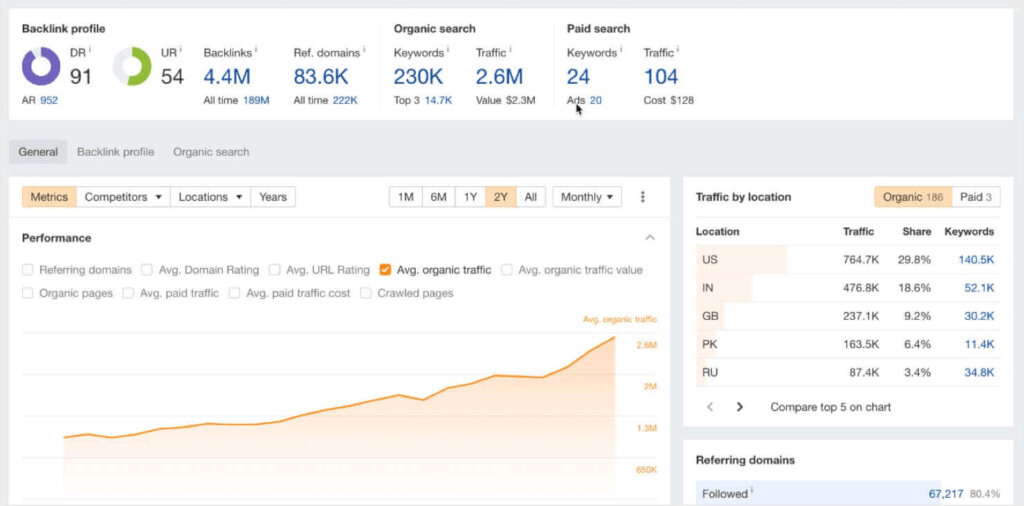
Ahrefs is the most thorough SEO competitor research tool available. I use it every time I need to understand exactly what a competitor ranks for, down to keyword position, monthly volume, and estimated traffic.
The Site Explorer feature is where most competitor research happens. Enter any competitor’s URL and you get every keyword it ranks for, every backlink pointing to it, and every page driving traffic.
Key features:
- Organic Keywords report (see every keyword a competitor ranks for)
- Content Gap tool (find keywords competitors rank for that you don’t)
- Backlink profile analysis with link quality metrics
- Top Pages report (which competitor pages drive the most traffic)
- AI Keyword Clustering, available on Standard subscriptions and above, groups related keywords automatically
Pricing: From $129/month (Lite). A $29/month paid trial is available. It’s not free, but it’s a low-cost way to test the platform before committing to an annual subscription.
Best for: SEO professionals and content strategists who need the most accurate keyword and backlink data.
One downside: Ahrefs doesn’t offer PPC competitor data the way Semrush does. If you run paid campaigns, you’ll want a second tool.
2. Semrush: Best All-in-One SEO and PPC Competitor Tool
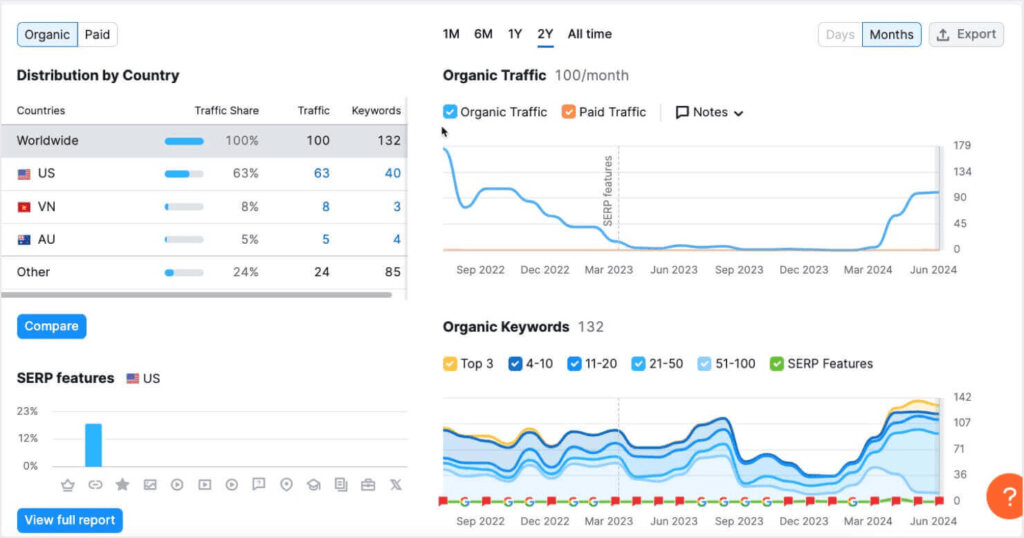
Semrush, now marketed as Semrush One, does more than any single competitor research tool on this list. It covers organic SEO, paid search, display advertising, and content analysis from one dashboard.
The Competitive Research toolkit is where it shines. You can see a competitor’s entire keyword universe, ad history, and traffic estimates side by side with your own data.
Key features:
- Organic Research (competitor keyword rankings and traffic)
- Advertising Research (competitor PPC keywords and ad copy)
- Traffic Analytics (full-funnel traffic source comparison)
- Market Explorer (industry landscape overview)
- AI search visibility tracking: see how your competitors appear in ChatGPT and Google AI Mode, not just traditional search
Pricing: From $139.95/month (Pro). Free account available with limited searches per day.
Best for: Teams that need SEO, PPC, and content competitor data in one place.
One downside: The volume of data can overwhelm beginners. Start with Organic Research and Traffic Analytics before exploring the full suite.
3. SpyFu: Best for Keyword and PPC Spying
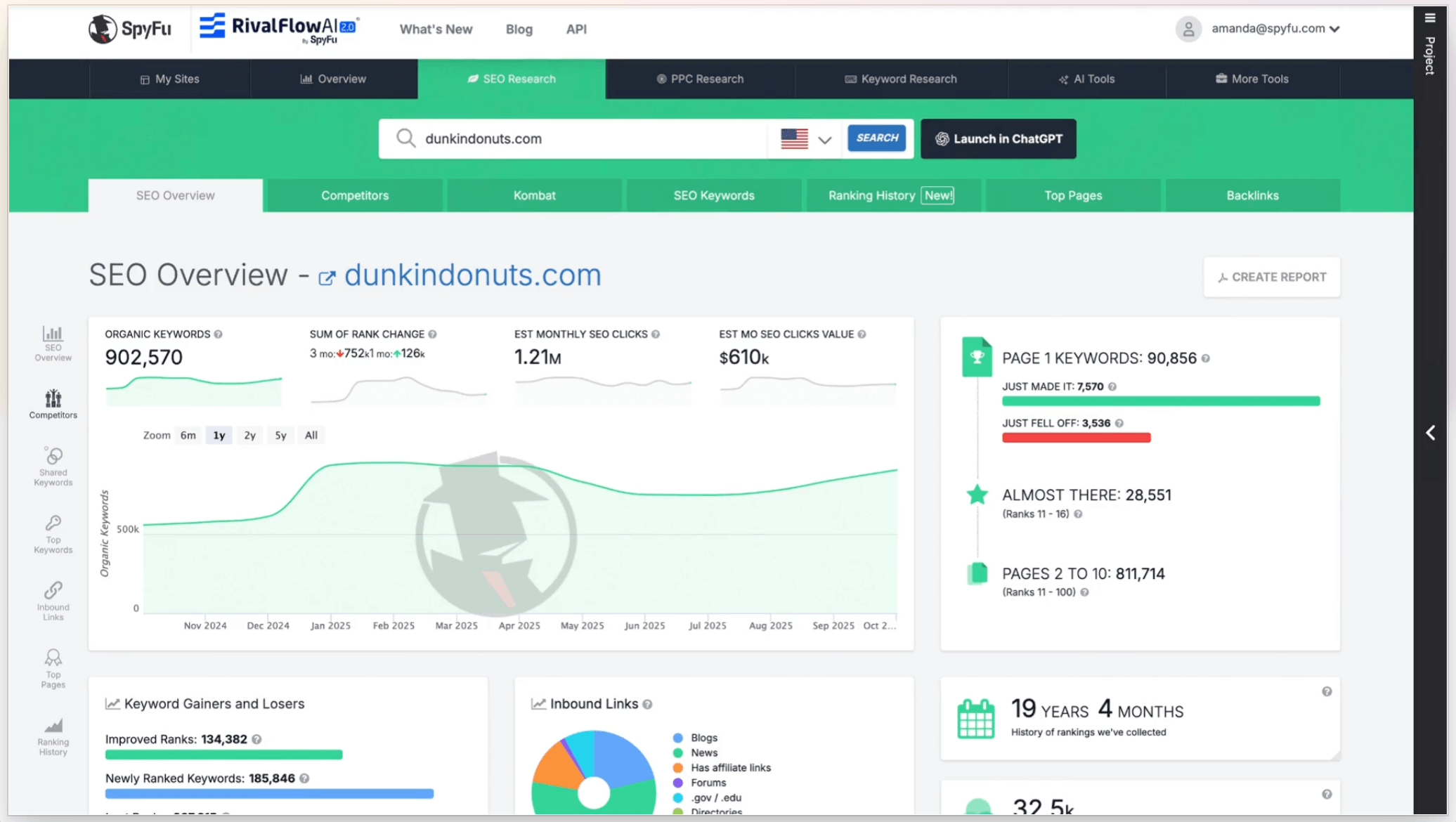
SpyFu is the specialist tool for competitor keywords, both organic and paid. Its historical data goes back to 2006, further than most alternatives.
The core feature is straightforward. Type in any competitor’s domain and see every keyword they’ve ever ranked for organically, plus every Google Ad they’ve ever run, including the actual ad copy.
Key features:
- Organic and paid keyword history going back years
- Ad history with full ad copy archive
- Kombat tool for three-way keyword comparison
- SERP analysis by keyword
- Backlink outreach tool with contact information
Pricing: From $39/month. All subscriptions include unlimited data with no per-search caps. SpyFu has no free trial, but there’s a 30-day money-back guarantee.
Best for: PPC managers and SEOs who want deep historical keyword data without Semrush pricing.
One downside: SpyFu’s data is US-centric. For international competitor research, Ahrefs or Semrush give better global coverage.
4. Moz Pro: Best for Beginners
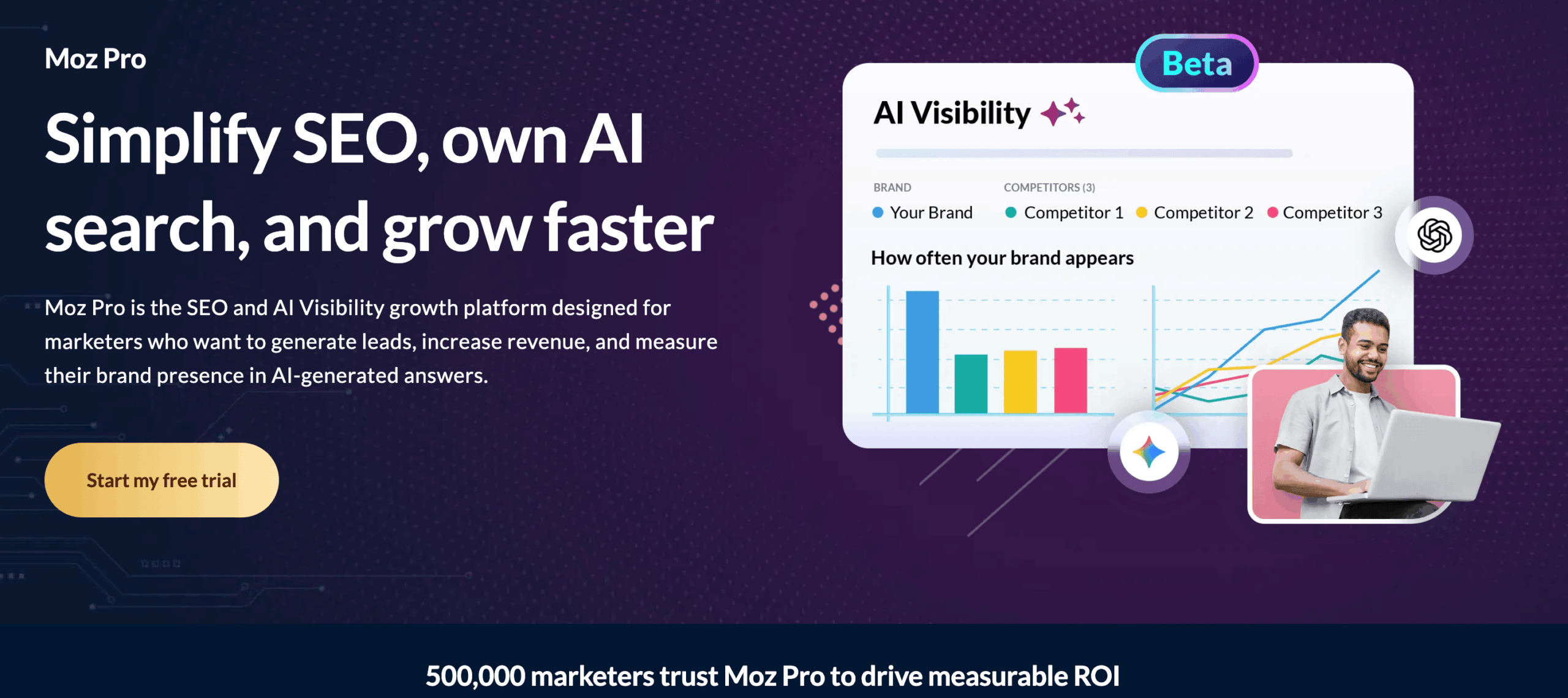
Moz Pro is the most beginner-friendly SEO competitor tool on this list. The interface is clean, the data is reliable, and it won’t take weeks to learn.
The Competitive Research features include a keyword gap analysis tool and the Link Intersect report, which shows you exactly which sites link to your competitors but not to you.
Key features:
- Keyword Explorer with volume, difficulty, and opportunity scores
- Link Intersect to find competitor backlink sources
- Rank tracking with competitor comparisons
- Domain Authority scoring for quick authority benchmarks
- On-page SEO recommendations
Pricing: From $99/month (Standard). 30-day free trial available.
Best for: Small business owners and marketing teams that are new to SEO competitor research.
One downside: Moz’s keyword and backlink databases are smaller than Ahrefs or Semrush. For deep research at scale, you’ll want a larger dataset.
5. SE Ranking: Best for Tracking Competitor Rankings Over Time
SE Ranking is a strong mid-range competitor research tool with an excellent rank tracker and a growing keyword database. It gives you most of what Semrush does at a lower price point.
The Competitive Research feature lets you analyze any domain and see its organic and paid keyword distribution. The rank tracker monitors how competitor positions change week over week.
Key features:
- Full competitor keyword and traffic analysis
- Daily rank tracking with competitor comparison
- Backlink monitor with link quality scoring
- On-page SEO checker
- White-label reporting for agencies
Pricing: From $65/month (Essential). 14-day free trial available.
Best for: Agencies and in-house SEOs who want solid competitor tracking without the Semrush price tag.
One downside: The keyword database coverage is weaker than Ahrefs or Semrush for long-tail research outside the US and UK.
Best Website Traffic and Competitive Intelligence Tools
These tools go beyond keyword rankings. They show you where competitors get their traffic and how much of it.
6. Similarweb: Best for Website Traffic Analysis
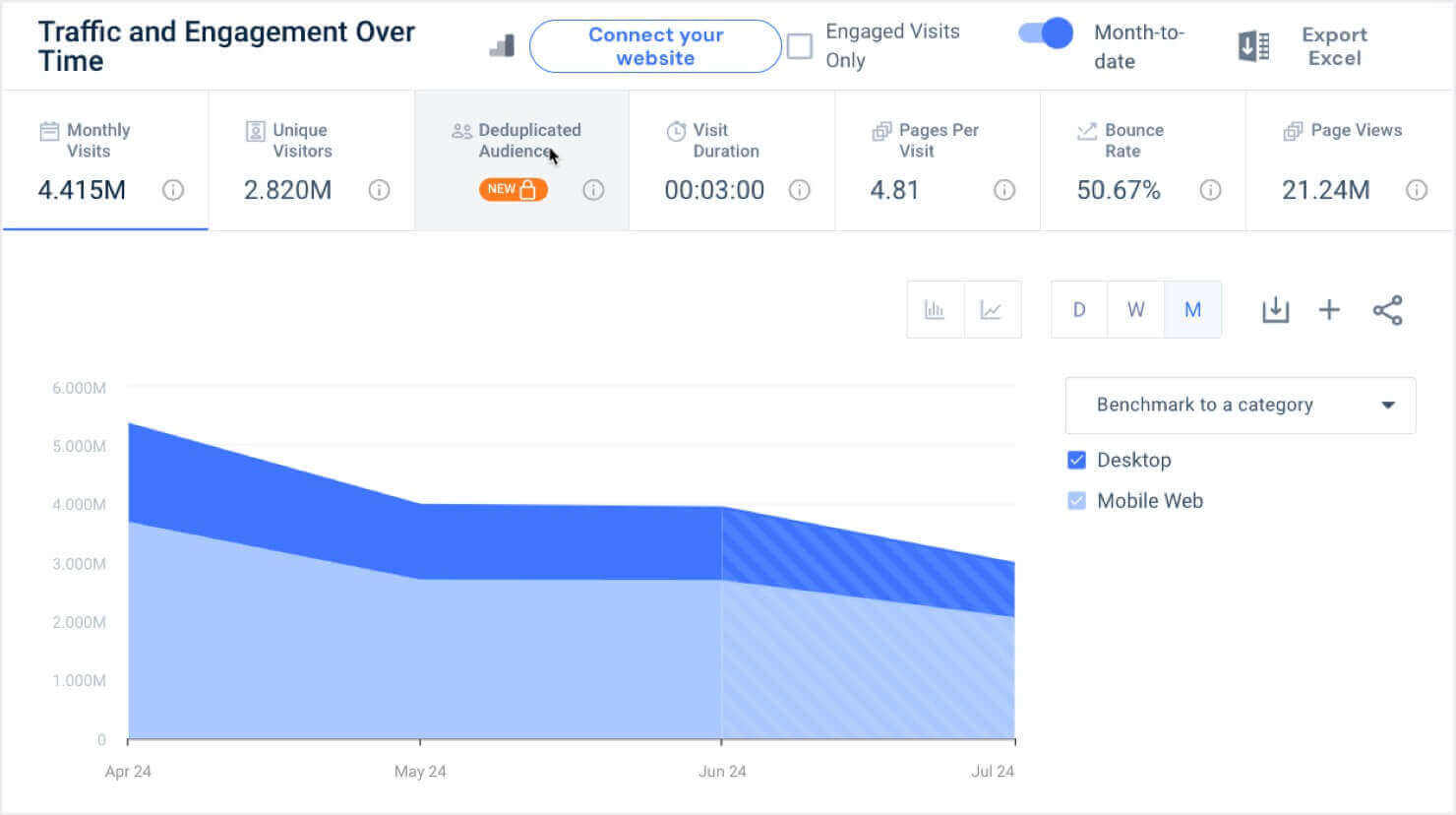
Similarweb is the go-to tool for understanding the full traffic picture of any website. It’s the closest thing to seeing a competitor’s actual analytics without them knowing you’re looking.
I’ve used it to identify which traffic sources a competitor is investing in before making channel decisions for our own growth strategy. The source breakdown alone saves hours of guesswork.
Key features:
- Traffic overview showing visits, bounce rate, session duration, and pages per visit
- Traffic source breakdown across organic, paid, social, direct, and referral
- Top referring websites and referral traffic analysis
- Audience geography and demographic estimates
- AI Studio, which lets you ask questions about competitor traffic patterns in plain English and get instant answers
Pricing: Custom pricing for all paid plans. Contact sales for a quote. A free tier is available with high-level data, though drill-downs and historical depth are limited.
Best for: Marketing strategists and growth teams who need a full-funnel view of competitor traffic.
One downside: Traffic estimates are approximations. For sites under 50,000 monthly visits, the data gets less reliable.
7. BuzzSumo: Best for Content Competitor Analysis
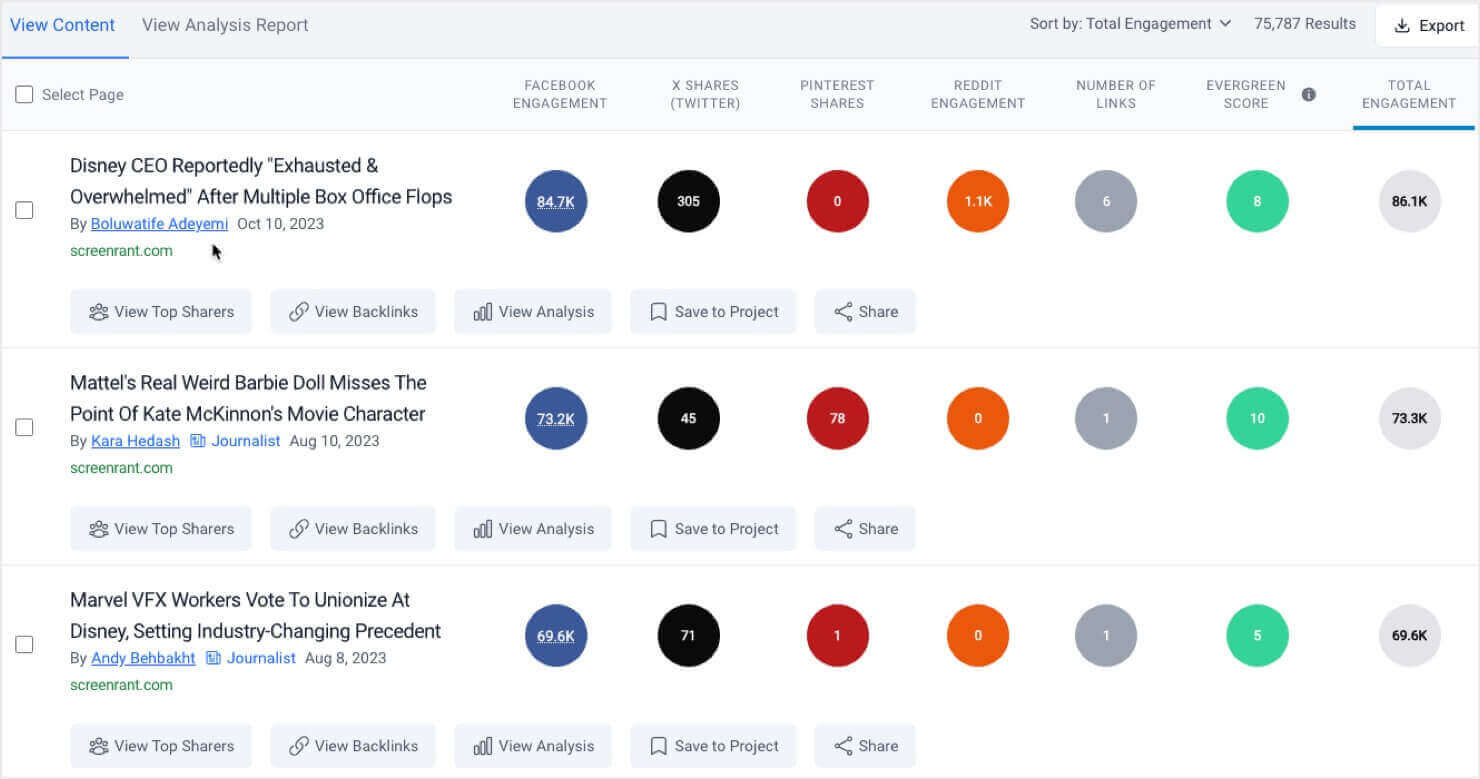
BuzzSumo is the tool you reach for when you want to understand what content is working for competitors. It shows you which articles, videos, and posts in your niche earn the most shares and backlinks.
I use it at the start of any new content strategy. It immediately shows what’s resonating with an audience, so you can create something more thorough and better targeted.
Key features:
- Content Analyzer for most-shared content by domain or topic
- Competitor content alerts
- Influencer discovery by topic
- Trending content by keyword
- Backlink tracking by content piece
Pricing: From $199/month (Content Creation plan). A free trial is available, though the duration varies. BuzzSumo is part of the Cision group.
Best for: Content marketers building a strategy who want to know what’s performing before they invest in creation.
One downside: BuzzSumo is expensive for its feature set. If you primarily need SEO competitor data, Ahrefs covers most of BuzzSumo’s content research features at a lower price.
Best Social Media Competitor Analysis Tools
These tools track what your competitors are posting, how their audiences are growing, and how your social performance benchmarks against theirs.
8. Sprout Social: Best for Social Media Competitive Reporting
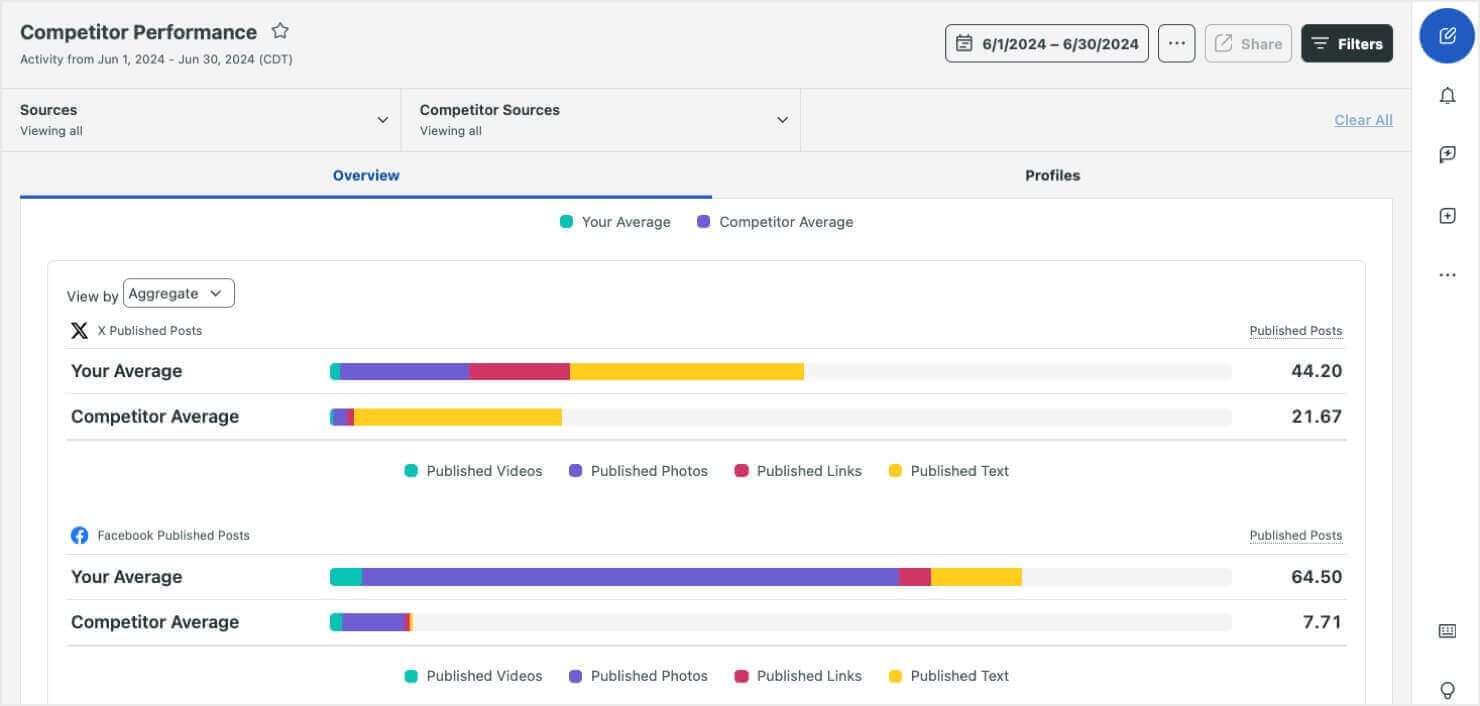
Sprout Social combines social media management with one of the better competitor analysis modules available. You get audience growth tracking, post performance benchmarking, and share-of-voice data in one dashboard.
The Competitive Reports feature lets you compare your Facebook, Instagram, Twitter or X, and LinkedIn performance against up to five competitors side by side.
Key features:
- Competitor performance benchmarking across all major platforms
- Share-of-voice tracking by brand mention
- Audience growth monitoring over time
- Post engagement comparison
- Social listening for brand and competitor mentions
Pricing: From $199/seat/month on the Standard plan, billed annually, or $249/seat/month on monthly billing. Pricing is per seat. A team of three pays $597/month on the annual plan. 30-day free trial available, no credit card required.
Best for: Social media managers and agencies who want both scheduling and competitor analysis in a single tool.
One downside: Per-seat pricing adds up quickly for larger teams. If you only need competitor data and not the full social management suite, Rival IQ is a more focused option.
9. Brandwatch: Best for Brand Monitoring and Social Listening
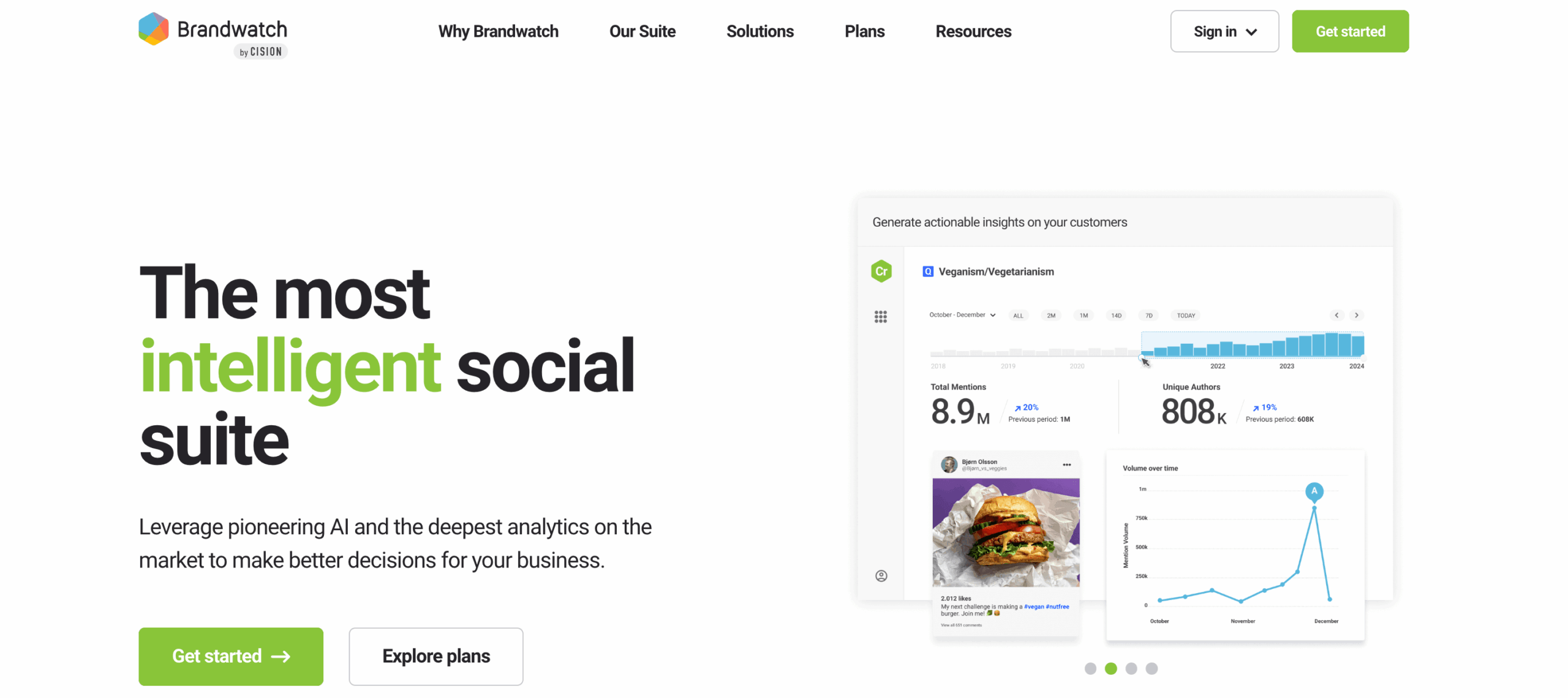
Brandwatch is an enterprise-grade social listening and consumer intelligence platform. It’s what large brands use to track what people say about them and their competitors across social, forums, blogs, news, and review sites.
The depth of listening data here goes well beyond what a typical social media management tool can provide. Brandwatch has also absorbed Falcon.io’s social management capabilities, making it a more complete platform than it was two years ago.
Key features:
- Social listening across 100+ million sources
- Competitor brand mention tracking with sentiment scoring
- Audience intelligence and demographic analysis
- Crisis detection alerts
- Full social media management, with Falcon.io capabilities now integrated
Pricing: Custom pricing for all plans. Contact sales for a quote. No pricing is listed publicly. Brandwatch is part of the Cision group, the same parent company as BuzzSumo.
Best for: Enterprise marketing teams and brand managers who need thorough competitive intelligence, not just social metrics.
One downside: Brandwatch is built for enterprise budgets. For smaller teams, Sprout Social covers most of what you need at a fraction of the cost.
10. Rival IQ: Best for Social Media Benchmarking
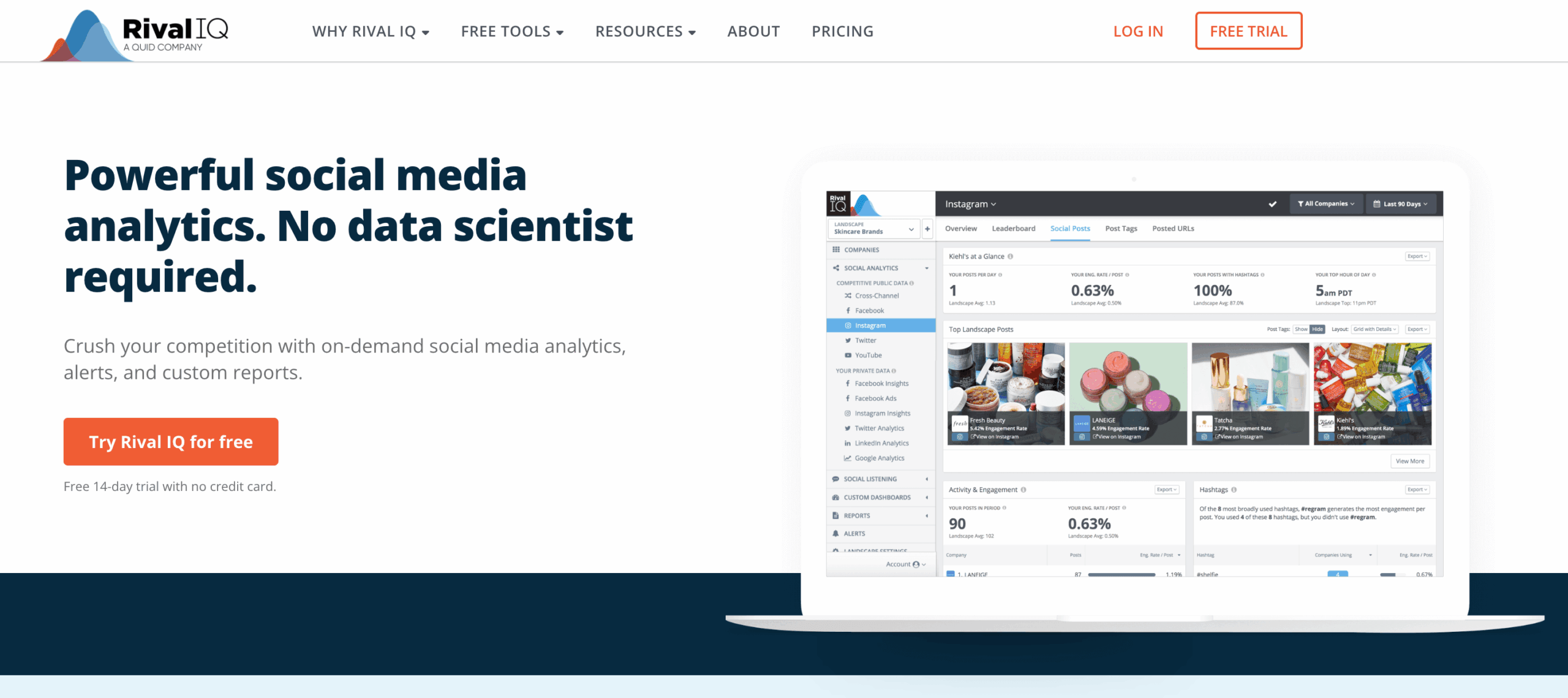
Rival IQ is purpose-built for social media competitor analysis. You set up a competitive landscape with your brand plus up to 20 competitors, and it continuously tracks everyone’s posting activity, engagement rates, and audience growth.
The benchmarking reports are where Rival IQ stands out. You can see exactly how your engagement rate compares to industry averages and to specific competitors, not just follower counts. Rival IQ is now part of Quid, a broader market intelligence platform.
Key features:
- Cross-platform competitive benchmarking across Facebook, Instagram, Twitter, LinkedIn, and TikTok
- Post frequency and timing analysis by competitor
- Engagement rate tracking with trend history
- Paid social performance monitoring
- Automated weekly competitive landscape reports
Pricing: From $239/month on the Drive plan, which includes 10 tracked companies. 14-day free trial available, no credit card required.
Best for: Social media teams focused on benchmarking and competitive content strategy.
One downside: Rival IQ is a pure analytics and benchmarking platform. It doesn’t offer social media scheduling or publishing.
Best Free Competitor Research Tools
You don’t need a paid subscription to start gathering useful competitor intelligence. These free tools give you a solid baseline at zero cost.
11. Google Alerts: Best Free Tool for Monitoring Competitor Mentions
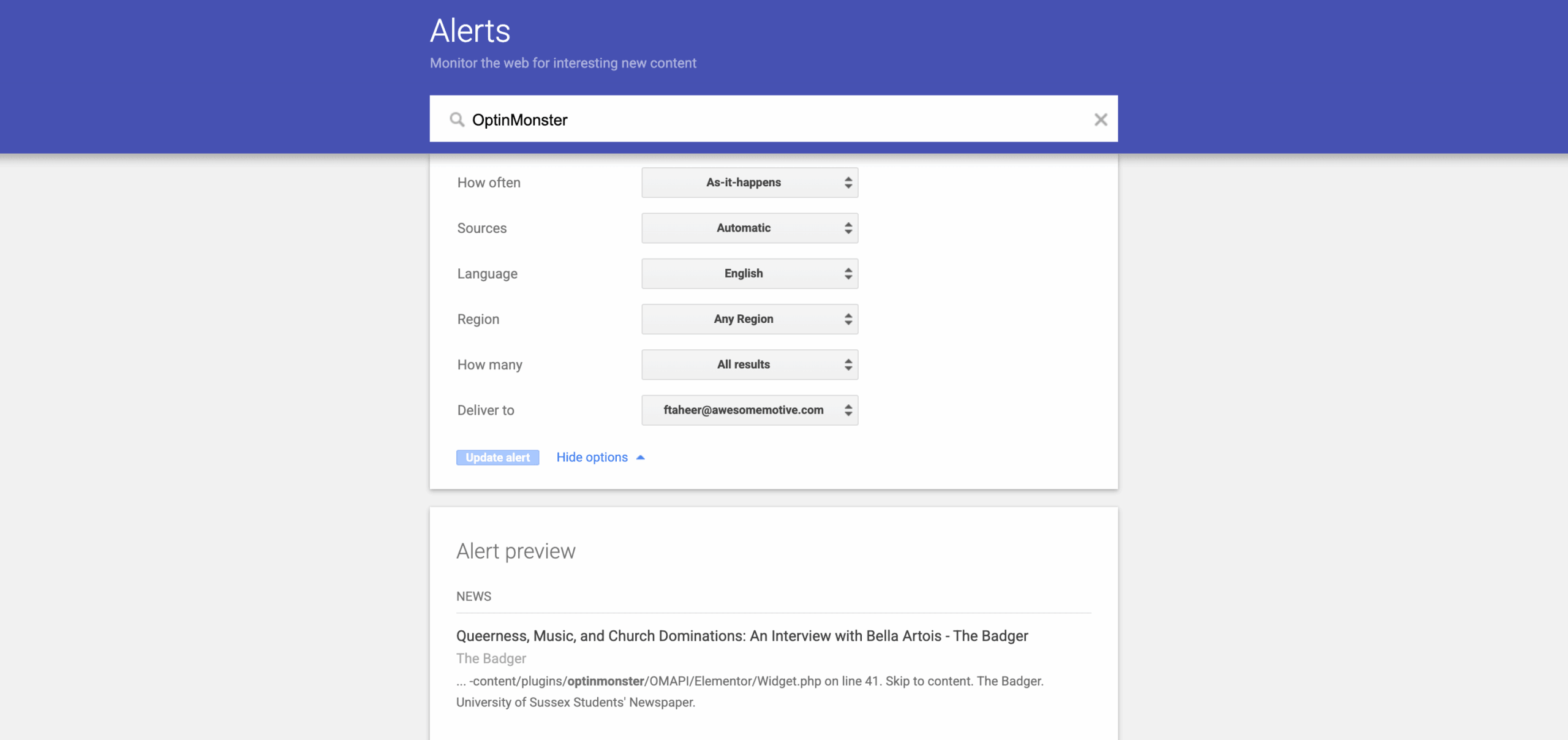
Google Alerts is the simplest competitor monitoring tool available. Set up an alert for a competitor’s brand name and Google emails you every time that brand gets a new mention online.
It won’t give you keyword rankings or traffic data. But it’s a fast, free way to stay informed about competitor news, partnerships, product launches, and press coverage.
How to use it:
- Go to google.com/alerts
- Enter a competitor’s brand name in quotes
- Set frequency to “as it happens” or “once a day”
- Repeat for each competitor you want to track
Best for: Business owners who want a passive, zero-cost competitor monitoring setup.
One downside: Google Alerts misses a large volume of mentions, especially on social media and behind paywalls. For thorough monitoring, Brandwatch or Sprout Social’s listening features are more reliable.
12. Ubersuggest: Best Free Keyword Competitor Tool
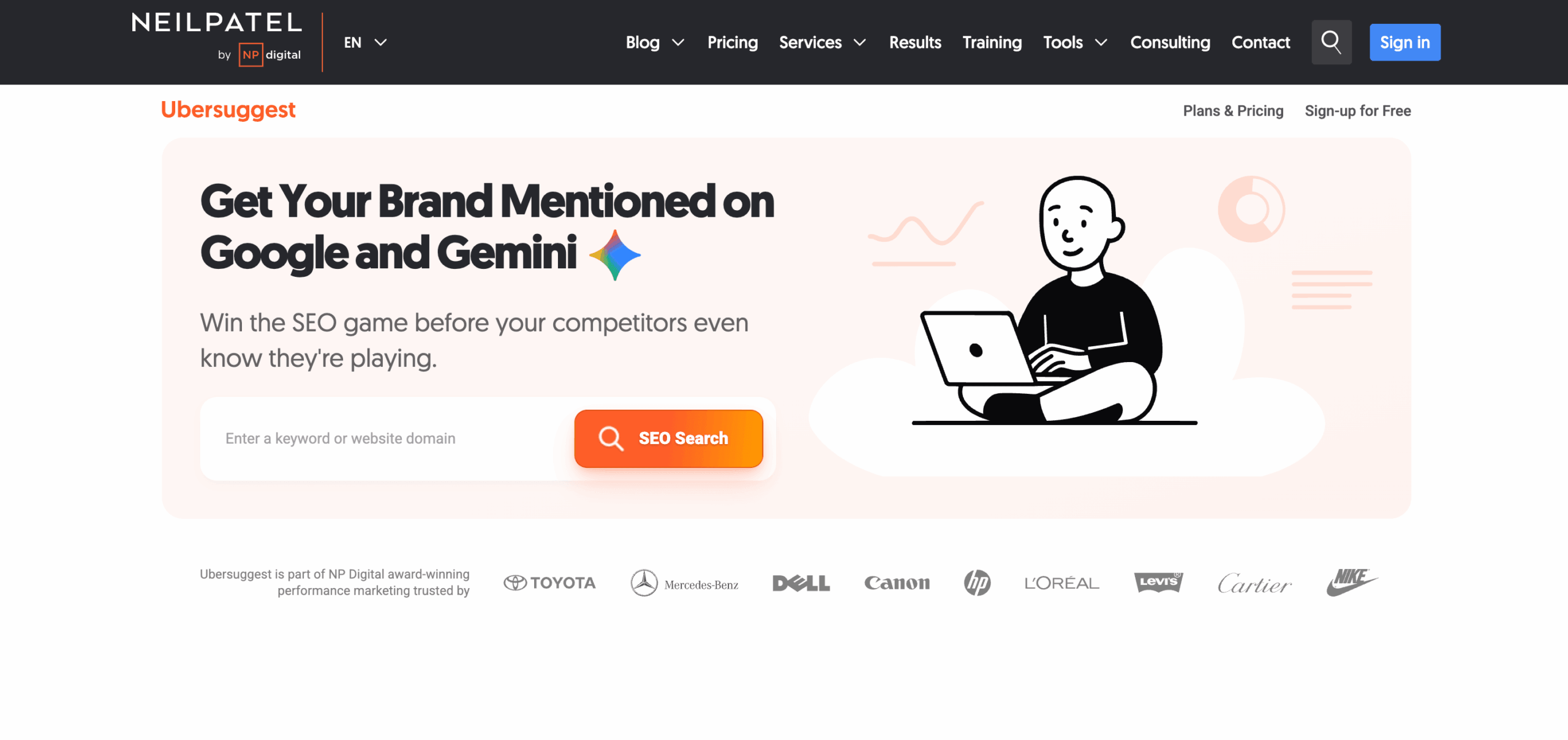
Ubersuggest gives you competitor keyword data, traffic estimates, and domain-level SEO metrics, with a free tier that doesn’t require a credit card.
Enter any competitor’s domain and see their top-ranking keywords, estimated monthly traffic, and the content with the most backlinks.
Key features (free tier):
- Domain overview with traffic estimates, keyword count, and SEO score
- Top pages by traffic
- Keyword suggestions based on competitor rankings
- Backlink checker
- Three searches per day on the free plan
Pricing: Free for up to three searches per day. The paid Individual plan starts at $12/month, or a one-time $120 lifetime deal.
Best for: Freelancers and small business owners who need basic competitor keyword data on a budget.
One downside: Three free searches per day is a tight limit. You’ll hit that cap quickly if you’re researching multiple competitors on the same day.
13. MozBar: Best Free Chrome Extension for SEO Research
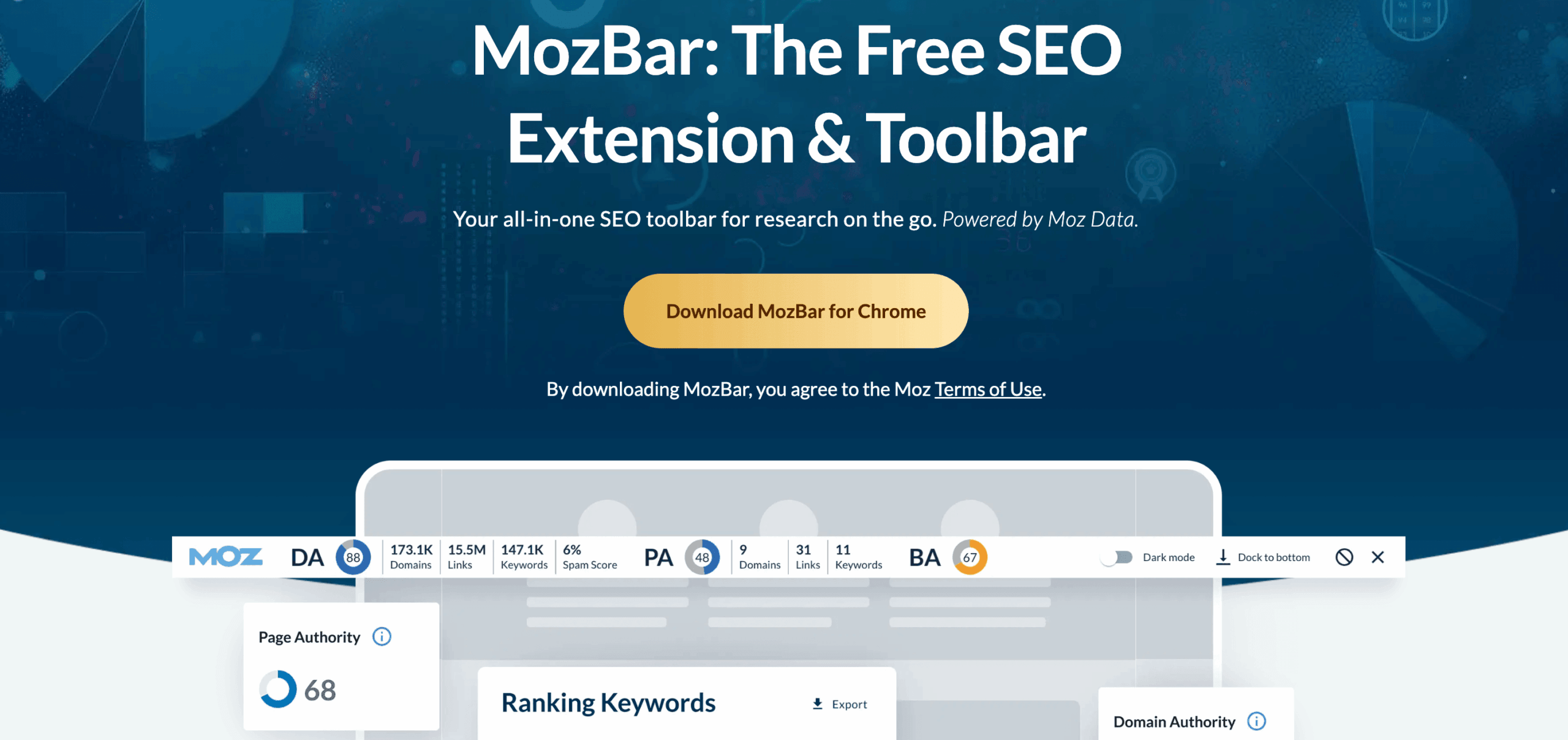
MozBar is a free Chrome extension that shows you SEO metrics directly in your browser as you visit any site. You can see a competitor’s Domain Authority, Page Authority, and backlink count without switching to another tool.
It’s especially useful for quick SERP analysis. When you search any keyword, MozBar overlays metrics on every result, so you can immediately assess how competitive it would be to outrank the current top pages.
Key features:
- Domain Authority and Page Authority for any URL
- Backlink count visible while browsing
- On-page SEO element highlighting
- SERP metrics overlay for any Google search
Pricing: The extension is free. Advanced features, including custom searches and deeper on-page analysis, require a Moz Pro subscription from $99/month.
Best for: SEOs who want quick authority checks without opening a separate tool.
One downside: MozBar only shows Moz’s metrics. Use it as a fast benchmark, not a definitive data source.
14. Social Blade: Best Free Social Media Stats Tool
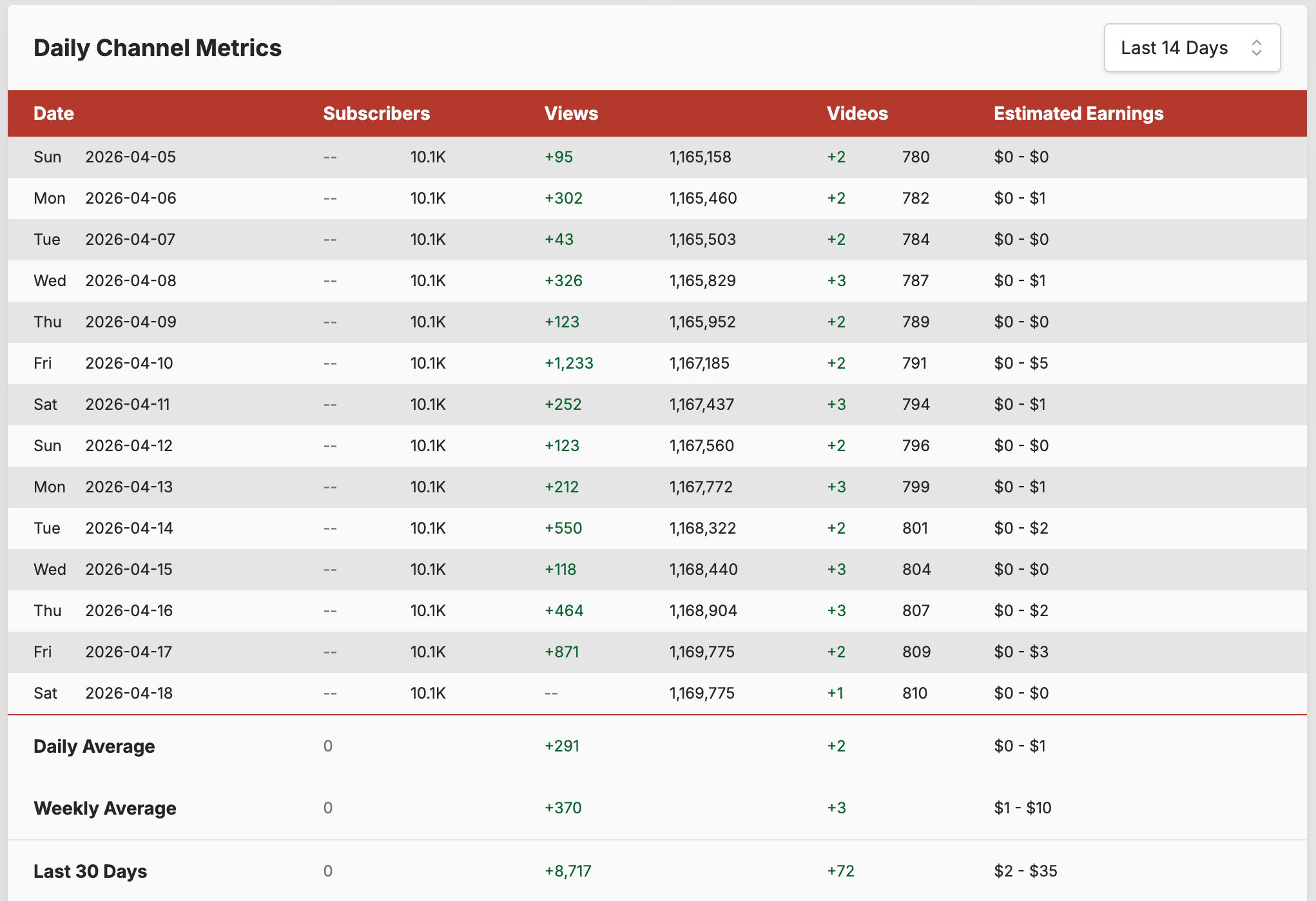
Social Blade tracks public statistics for YouTube, Instagram, TikTok, Twitter, and Twitch. Look up any public account and see their follower growth history, estimated earnings, and posting activity for free.
It won’t give you engagement rates or content performance details. But it shows you whether a competitor’s social presence is growing, stagnant, or declining.
Key features:
- Follower and subscriber growth charts going back several years
- Estimated monthly earnings for YouTube channels
- Comparative growth benchmarking between accounts
Pricing: Free. Premium accounts are available for additional data depth.
Best for: Content creators and social media managers who want to benchmark competitor channel growth at no cost.
One downside: Social Blade only covers public data. You’ll see growth trends but not engagement rates or content performance.
How to Choose the Right Competitor Research Tool
The right tool depends on what you’re trying to learn. Here’s how to match the tool to the job.
Start with your primary channel. If most of your marketing is search-focused, start with Ahrefs or Semrush. If social media is your growth engine, start with Sprout Social or Rival IQ. Don’t pay for a full suite if you only need one channel covered.
Match data depth to your budget. Ahrefs and Semrush give you the most accurate SEO data but cost more. SE Ranking and Ubersuggest offer affordable paid subscriptions with free tiers to start. For most small businesses, SE Ranking gives you 80% of what Semrush does at half the cost.
Consider historical data needs. SpyFu’s keyword archive goes back to 2006. That’s invaluable if you want to understand how a competitor’s keyword strategy has evolved. Most tools only show current data or 12-month comparisons.
Think about team size. Brandwatch and Sprout Social are built for teams with multiple users and complex reporting workflows. Sprout Social’s per-seat pricing adds up fast, so factor in your full team headcount before comparing it to flat-rate tools. If you’re a solo operator or small team, a single-user Semrush or Ahrefs subscription covers you well.
Test before you commit. Most tools on this list offer free trials or limited free accounts. Run the same competitor domain through two or three tools before committing to an annual subscription.
Understanding Your Competitors = Better Marketing for Your Brand
The right competitor research tools give you a clear view of what’s working in your market. You stop guessing and start making decisions based on actual data.
Start with one tool from the category that matters most to your business. Run a competitor analysis this week. The patterns you find will directly shape your next content, keyword, or campaign decision.
Once you know what’s driving traffic for your competitors, OptinMonster helps you convert that traffic into subscribers and customers. Our conversion toolkit includes exit-intent popups, floating bars, and targeted campaigns, all built to turn the visitors you’ve worked to attract into people who stay.
Sign up for OptinMonster today and launch a comprehensive lead generation campaign in minutes. That way, you’ll be ready to convert all the visitors you’ll gain through your competitive research.
Frequently Asked Questions
What Is the Best Free Competitor Analysis Tool?
The best free competitor analysis tool depends on what you need. For SEO data, MozBar and Ubersuggest’s free tier give you domain authority, keyword rankings, and traffic estimates at no cost. For monitoring brand mentions and news, Google Alerts is the easiest setup. For social media growth tracking, Social Blade covers YouTube, TikTok, and Instagram for free.
What Tools Do SEOs Use for Competitor Research?
Professional SEOs most commonly use Ahrefs and Semrush for competitor keyword research. Ahrefs Site Explorer is the go-to for backlink analysis and organic keyword data. Semrush’s Organic Research tool is popular for side-by-side traffic comparison. Many SEOs also use SpyFu for PPC competitor research and ad history.
What Is the Difference Between Competitive Analysis and Competitor Research?
Competitor research is the process of gathering data about specific competitors, including their keywords, backlinks, traffic, and content strategies. Competitive analysis is the broader process of interpreting that data to understand your market position and identify strategic opportunities. Competitor research tools help you gather the raw data. Competitive analysis is what you do with it.
How Often Should I Run Competitor Analysis?
For most businesses, a monthly competitor check is sufficient. Set up Google Alerts for continuous passive monitoring and run a full keyword and traffic analysis quarterly. If you’re in a fast-moving industry or managing active PPC campaigns, check competitor keywords and ads weekly.
Can I Do Competitor Research Without Paid Tools?
Yes. Google Alerts monitors brand mentions for free. MozBar shows SEO metrics on any page. Ubersuggest’s free tier gives you basic keyword and traffic data with three searches per day. Google Search Console shows where you rank, which tells you who ranks above you. Paid tools give you more accuracy and depth, but free tools are a legitimate starting point.
Disclosure: Our content is reader-supported. This means if you click on some of our links, then we may earn a commission. We only recommend products that we believe will add value to our readers.
46 responses to “14 Best Competitor Research Tools in 2026 (SEO, Social and Web)”
-

Really useful article. It clearly shows how understanding competitors can help make smarter decisions instead of guessing. I like how it highlights practical tools that businesses can actually use to improve their strategy.
Simple and valuable insights, thanks for sharing.
-
This was such a helpful roundup! Competitive research is one of those tasks many marketers understand they should be doing but often feel overwhelmed by the idea of not knowing which tools will actually yield results worth their time. I appreciate that the author did a compare and contrast across SEO, social media, and web analytics rather than focusing solely on one category. It was also extremely helpful to have each tool explained with an emphasis on their particular benefits in a practical and digestible way. Gaining insight into what a business’s competition is doing can cut down on a lot of guesswork and trial and error, and a guide such as this will undoubtedly make it much easier for anyone to select the correct tool for their desired goal. This article is an excellent resource for marketers and business owners alike!
-
The tone here is perfect — informative without being preachy. Keep it up!
-
Honestly, could read this on loop. Awesome breakdown. Bookmarked and subscribed.
-
Loved reading this. Quick one — Would love to hear your take on related topics. Either way, can’t wait for the next one.
-
You write like you respect the reader’s time. Amazing article.
-
You write like you respect the reader’s time. Excellent write-up. Cheers,
-
Your perspective really resonates with me. If you ever do a newsletter, I’m first in line. Thanks for sharing!


Add a Comment